
How to Choose a Dog Groomer for Senior Dogs
A stiff back leg on the walk to the door, a little hesitation on the steps, a nap that lasts longer than it used to - senior dogs have different needs, and grooming should reflect that. Finding the right dog groomer for senior dogs is not just about getting a neat trim. It is about choosing someone who understands comfort, pace, handling, and how to make the whole experience feel calm instead of overwhelming.
As dogs age, even routines they once handled easily can become harder. Standing for long periods may be uncomfortable. Loud spaces can feel more stressful. Car rides, waiting rooms, and time spent in cages can take more out of an older dog than many owners realize. That is why the grooming environment matters just as much as the grooming itself.
Why senior dogs need a different grooming approach
Older dogs are more likely to deal with arthritis, reduced hearing or vision, skin sensitivity, lumps and bumps, and general fatigue. None of that means they should skip grooming. In fact, regular grooming often becomes more important with age because it helps keep skin clean, nails manageable, coats free of painful matting, and trouble spots easier to notice.
The difference is in how the appointment is handled. A senior dog usually benefits from shorter, gentler sessions and one-on-one attention. They may need extra support while standing, more frequent breaks, or a modified haircut that is easier to maintain between appointments. A groomer who works well with puppies or high-energy dogs is not automatically the best fit for a dog in their golden years.
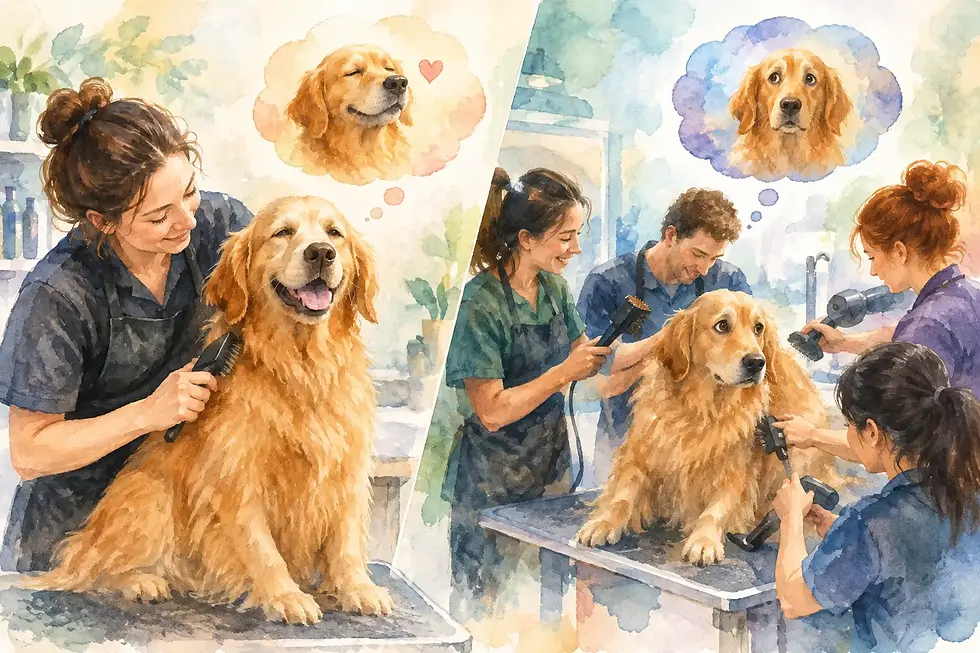
This is where many traditional salon setups can be a mixed bag. Some dogs do fine in that environment. Others struggle with the noise, the movement, the waiting, and the unpredictability. For seniors, those stressors can show up as trembling, panting, resistance, or simply complete exhaustion after the visit.
What to look for in a dog groomer for senior dogs
The first thing to look for is patience. That sounds simple, but it shows up in very practical ways. A good groomer does not rush an older dog onto the table and push through discomfort. They watch body language, adjust their handling, and know that a slower appointment can still be a successful one.
Experience matters too, but not just in a general sense. Ask whether the groomer regularly works with older dogs and how they adapt for mobility issues, anxiety, hearing loss, or skin changes. A skilled senior-focused groomer knows that the goal is not perfection at any cost. The goal is a clean, comfortable dog who has been treated with care.
It also helps to look for a setup that minimizes strain before grooming even begins. If your dog has trouble with car rides, getting in and out of the vehicle, or being around multiple barking dogs, a quieter one-on-one service may be a better fit. For many families, mobile grooming or in-home convenience is not just easier. It can be significantly gentler on the dog.
Sanitation and safety should be non-negotiable. Senior dogs can have more sensitive immune systems and skin, so clean tools, a sanitized workspace, and careful handling are essential. Fully insured grooming businesses also provide another layer of confidence for owners who want professionalism, not guesswork.
Questions worth asking before you book
A few direct questions can tell you a lot. Ask how long the appointment usually takes and whether the groomer can work at a slower pace if needed. Ask if dogs are groomed one at a time or if there is waiting involved. Ask how they handle dogs who need breaks, cannot stand comfortably for long, or get anxious during drying or nail trims.
You can also ask whether they are comfortable skipping or modifying parts of the groom if your dog is having a hard day. That flexibility matters. Some senior dogs can handle a full groom every visit. Others do better with a bath and tidy one time, then a more complete groom next time. A good groomer will talk through what makes sense instead of forcing a standard package.
If your dog has a medical condition, mention it before the appointment. Arthritis, heart issues, collapsing trachea, seizures, skin allergies, and vision loss can all affect grooming decisions. Groomers are not veterinarians, but the right one will respect those details and work within safe limits.
Signs the grooming experience is too stressful
A little nervousness is common, especially if your dog is adjusting to a new routine. But there is a difference between mild uncertainty and a grooming setup that is simply too much.
If your dog comes home unusually exhausted for the rest of the day, seems sore, drools excessively, hides, or resists the next appointment far more than usual, it is worth taking a closer look. Stress can build over time. Owners sometimes assume their dog is just getting crankier with age when really the process has become harder on their body and nervous system.
That does not always mean grooming needs to stop. It may mean the schedule should change, the haircut should be simplified, or the environment should be quieter and more controlled. Sometimes the biggest improvement comes from removing the hardest parts of the day, like transportation, long waits, and overstimulation.
Why mobile grooming can be a strong fit for older dogs
For senior dogs, less transition often means less stress. A mobile groomer comes to your home, which cuts out the car ride, the unfamiliar salon, and the extra time spent waiting around other pets. That can make a real difference for dogs with joint pain, anxiety, or sensory changes.
The one-on-one setup is another advantage. In a calmer space, groomers can focus fully on your dog without juggling several appointments at once. That personal attention often leads to a better read on your dog’s comfort level and a gentler pace throughout the visit.
For owners, it also makes the day easier. You are not rearranging your schedule around drop-off and pickup windows or wondering how your older dog is doing in a crowded salon. The convenience is real, but for seniors, the comfort side may matter even more.
That is one reason families in North Georgia often prefer a service like The Wag Works for aging pets. A cage-free, personalized grooming appointment right at home can remove many of the common pressure points that make grooming harder on older dogs.
Grooming choices that help senior dogs stay comfortable
Not every senior dog needs the same grooming plan. Coat type, health, temperament, and mobility all matter. Still, there are a few common adjustments that often help.
Shorter styles can be easier to maintain and less likely to mat, especially if brushing at home has become more difficult. Nail care becomes especially important because long nails can affect balance and make sore joints work even harder. Gentle bathing with appropriate products may help dogs with dry skin or age-related coat changes, while deep conditioning can improve comfort for some coats.
Face, feet, and sanitary trims can also go a long way between full grooms. For some senior dogs, these smaller maintenance visits are the difference between staying comfortable and falling behind until the next major appointment feels like too much.
It depends on the dog, though. Some older dogs still do beautifully with full regular grooming. Others need a more flexible rhythm. The best grooming plan is the one your dog can tolerate well and recover from easily.
Your role as the owner matters too
The groomer sees your dog for a visit. You see the day-to-day changes. That makes your input valuable. If your dog has been slower getting up, more sensitive around the hips, or less tolerant of brushing, say so. Those details help shape a safer, kinder appointment.
It also helps to book on a consistent schedule rather than waiting until the coat becomes difficult to manage. Severe matting, overgrown nails, and long gaps between appointments can make grooming much harder on an older dog. Regular upkeep is usually gentler than catching up.
Try to choose appointment times when your dog is typically at their best. For some seniors, mornings are easier. For others, a mid-day slot works better after they have had time to wake up and settle in. Little timing choices can have a bigger impact than people expect.
A good dog groomer for senior dogs will pay attention to coat condition, cleanliness, and appearance. A great one will also pay attention to comfort, energy, and trust. When your dog is older, that balance matters. Grooming should still leave them feeling cared for, not worn out.
The right fit is not always the fanciest service or the closest appointment on the calendar. It is the groomer who understands that your senior dog is not being difficult, slow, or dramatic. They are simply asking for a little more gentleness now - and they deserve it.
Comments