
Stress Free Dog Grooming That Dogs Tolerate
Some dogs start shaking before the car keys even come out. Others do fine at home, then shut down the moment they hear barking, smell unfamiliar dogs, or sit too long in a kennel. That is exactly why stress free dog grooming matters. A groom is not just about a clean coat or tidy nails. It is also about how your dog feels during the process, and whether the experience builds trust or chips away at it.
For many families, the hardest part of grooming is not the haircut. It is everything wrapped around it - the drive, the handoff, the noise, the waiting, and the uncertainty. Dogs that are sensitive, older, reactive, or simply routine-driven often struggle with that full chain of events. When grooming is designed to reduce those pressure points, the result is usually a calmer dog and a better appointment.
What stress free dog grooming really means
Stress free dog grooming does not mean every dog will love every second of grooming. Some dogs dislike nail trims. Some are wary of dryers. Some need time to accept brushing in sensitive areas. The goal is not perfection. The goal is reducing avoidable stress and handling the necessary parts of grooming with patience, skill, and care.
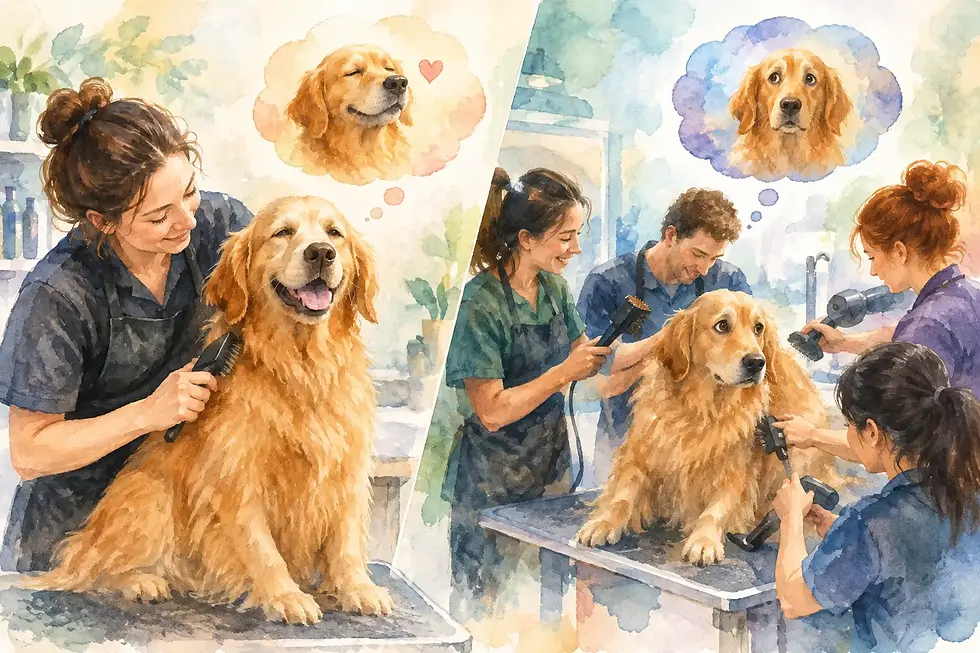
That usually starts with a quieter setting and one-on-one attention. When a dog is not surrounded by a busy salon full of barking, movement, and unfamiliar pets, there is less sensory overload to manage. A groomer can pay closer attention to body language, adjust pace when needed, and keep the appointment focused on one dog instead of juggling several at once.
It also means grooming without unnecessary waiting. Long gaps between check-in and the actual groom can raise anxiety, especially for dogs that do not do well in cages or unfamiliar spaces. A more direct appointment flow tends to be easier on dogs because there is less anticipation and less time spent in a heightened state.
Why traditional salon grooming is hard on some dogs
Traditional grooming salons work well for many pets, but they are not the best fit for every personality. A social, easygoing dog may tolerate the commotion just fine. A nervous dog may not. That difference matters.
For anxious pets, the grooming experience often becomes stressful before the groom even begins. The car ride can be a trigger. The arrival can be a trigger. The smell of other animals, the sounds of dryers, the pace of a busy salon, and being separated from their person can all stack together. Once that stress builds, even simple tasks like bathing or brushing can feel harder for the dog.
There are also practical trade-offs. Salons often need dogs dropped off for a window of time, which may be convenient for business flow but not always ideal for the pet. Some dogs settle eventually. Others spend that time escalating. If your dog comes home exhausted, clingy, or noticeably unsettled after grooming, it may not be the groom itself causing the problem. It may be the environment around it.
The biggest difference is the setup
A calmer grooming experience usually starts with removing as many friction points as possible. That is one reason mobile and in-home adjacent grooming services have become such a strong option for pet owners who want more than basic convenience.
When the groomer comes to you, your dog skips the car ride, the crowded lobby, and the waiting room energy. Instead of spending part of the day adjusting to a salon environment, your dog begins from a familiar place - home. That alone can make a major difference for dogs that are sensitive to change.
One-on-one, cage-free appointments also help. Without a row of dogs coming and going, groomers can work in a more controlled rhythm. There is more room to notice whether your dog needs a short pause, gentler reassurance, or a different approach to a sensitive area. A pet-first setup is not about moving slowly for the sake of it. It is about moving thoughtfully enough to keep the dog regulated.
Which dogs benefit most from stress free dog grooming
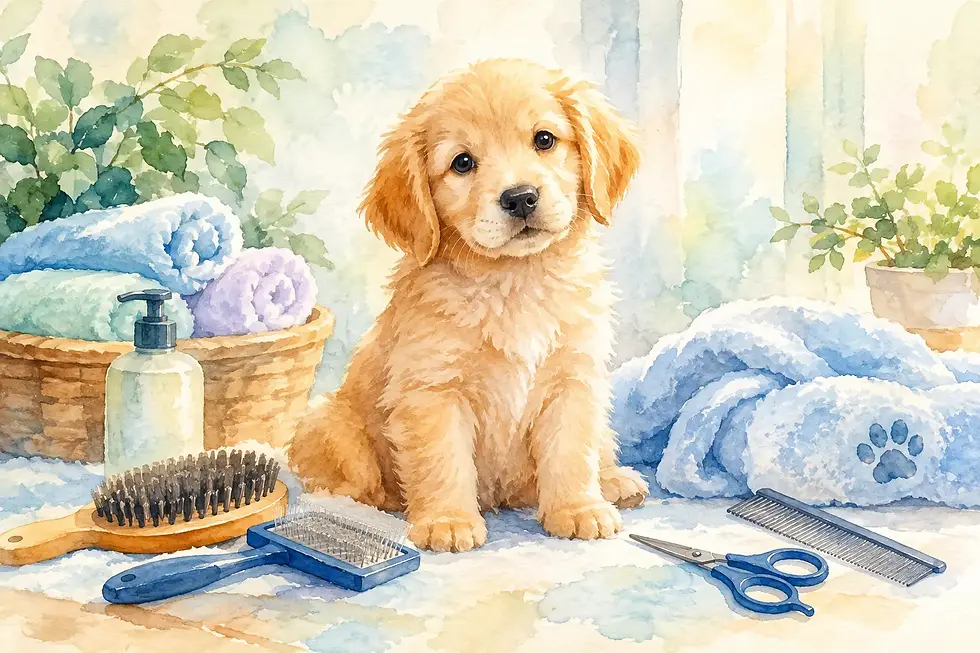
Almost any dog can benefit from lower-stress handling, but some dogs need it more than others. Puppies are still learning what grooming feels like, so first impressions matter. If early appointments are rushed or overwhelming, those memories can stick.
Senior dogs also tend to need more thoughtful grooming. They may have arthritis, reduced stamina, hearing or vision changes, or skin sensitivity that makes standard handling uncomfortable. What looked like stubbornness in a younger dog may actually be pain or fatigue in an older one.
Then there are the dogs many owners worry about most - anxious dogs, rescue dogs, reactive dogs, and dogs with a history of difficult grooming visits. These dogs often do best when triggers are minimized and trust is built over time. That does not always mean every appointment is easy. It does mean the dog has a better chance to succeed in a quieter, more predictable environment.
What to look for in a low-stress grooming experience
Not every business that says it is gentle delivers the same level of care. The details matter. A genuinely low-stress groomer pays attention to handling, timing, cleanliness, and communication.
Look for one-on-one appointments, clear sanitation practices, and a process that avoids unnecessary kennel time. Ask how the groomer handles anxious dogs, whether they rush through difficult moments, and how they adjust when a dog needs a break. You also want to know that the operation is fully insured and professionally run. Comfort matters, but so does safety.
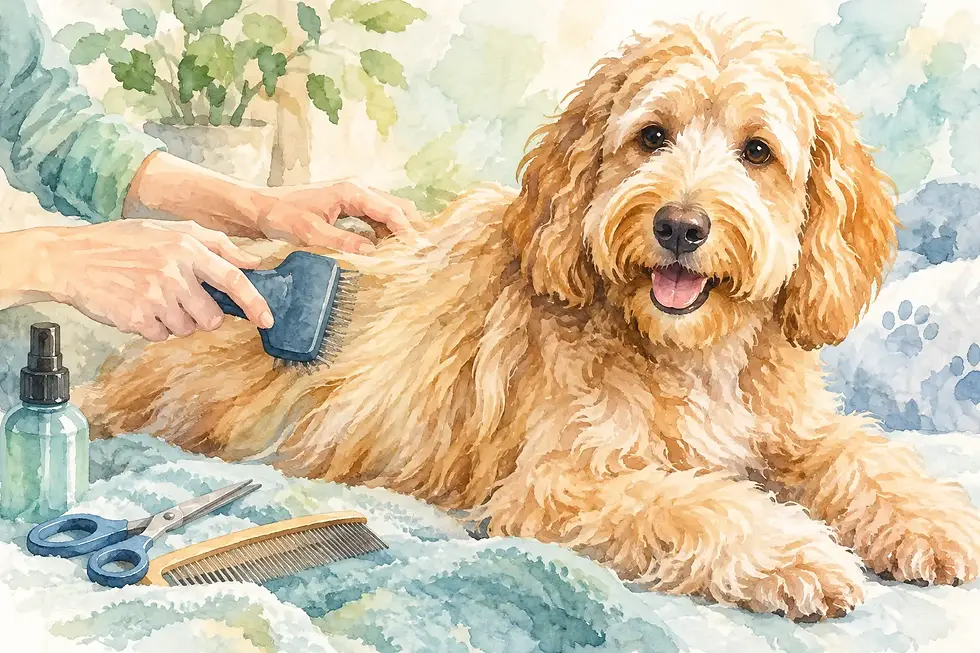
It helps when the service is individualized rather than breed-stereotyped. Two doodles may need completely different approaches. Two senior Chihuahuas may tolerate grooming in very different ways. Good grooming is not just about the haircut. It is about reading the dog in front of you and responding accordingly.
How owners can support a calmer appointment
A stress free dog grooming appointment starts before the groomer arrives. Dogs pick up on our energy, so a rushed or worried handoff can make a nervous pet even more alert. Keeping the lead-up calm and predictable often helps more than owners expect.
Try to schedule at a time when your dog is usually settled rather than overly hungry, overexcited, or exhausted. A quick potty break beforehand can help, too. If your dog has specific triggers, be honest about them. That is useful information, not an inconvenience. The more your groomer knows, the better they can plan.
Consistency also matters. Dogs usually do better when grooming happens on a regular schedule rather than after months of coat buildup, matting, or overgrown nails. When coats are heavily impacted or nails are very long, grooming can become more physically uncomfortable. A more routine cadence is often gentler in the long run.
Comfort and quality can go together
Some people assume a lower-stress approach means sacrificing the quality of the groom. In practice, the opposite is often true. A dog that feels safer is usually easier to handle, more cooperative, and better able to tolerate the full appointment. That makes it easier to achieve a clean, polished result without pushing the dog past their limit.
There are, of course, moments when comfort and appearance need to be balanced. A severely matted coat may need to be clipped shorter than an owner hoped. A dog with major anxiety may need a simpler trim on one visit and a more refined finish on the next. That is not a sign of poor grooming. It is a sign that the dog’s well-being is being treated as part of the service, not as an obstacle to it.
For families in North Georgia who want grooming to feel less like a disruption and more like thoughtful care, that balance matters. Services like The Wag Works are built around that idea - professional grooming quality paired with a calmer, cleaner, more individualized experience right at your doorstep.
When grooming is done with patience, a quiet setting, and respect for the dog in front of you, the whole routine changes. The coat gets cleaned, the nails get trimmed, and the dog comes away feeling more secure instead of wrung out. That is a better standard to aim for, and most dogs will tell you so long before they ever wag their way back inside.
Comments