
12 Questions to Ask a Dog Groomer Before Booking
A grooming appointment should leave your dog clean, comfortable, and proud of their fresh look - not shaken from a long car ride, hours of waiting, or unfamiliar noise. Knowing the right questions to ask a dog groomer helps you look beyond a cute haircut and choose care that fits your dog's temperament, health needs, and routine.
For many North Georgia families, convenience matters too. A great groomer should be able to explain not only what they do, but how they keep pets safe, calm, and cared for from drop-off to pickup - or right at your doorstep.
Questions to Ask a Dog Groomer About Safety and Care
1. Are you insured, and what safety procedures do you follow?
Professional grooming involves sharp tools, water, dryers, lifting, and close handling. While experienced groomers work carefully to prevent accidents, asking about insurance and safety procedures is a reasonable part of choosing a provider.
Listen for a clear, confident answer. A groomer should be able to explain how they supervise dogs, keep pets secure during the service, recognize signs of stress, and respond if a dog becomes uncomfortable or has a medical concern. Full insurance is one sign that a business takes its responsibilities seriously.
2. How do you handle anxious, senior, or reactive dogs?
Not every dog enjoys grooming, and that does not make them a “bad” dog. Some dogs struggle with car rides, noisy dryers, unfamiliar people, arthritis, or past negative experiences. Others simply need more time to feel safe.
Ask how the groomer adjusts their approach for a dog like yours. Gentle handling, breaks when needed, and a patient pace can make a meaningful difference. A one-on-one, cage-free appointment may be especially helpful for dogs who become overwhelmed in a busy salon setting. Be honest about your dog's triggers before booking so the groomer can plan appropriately.
3. Will my dog be kenneled or groomed alongside other dogs?
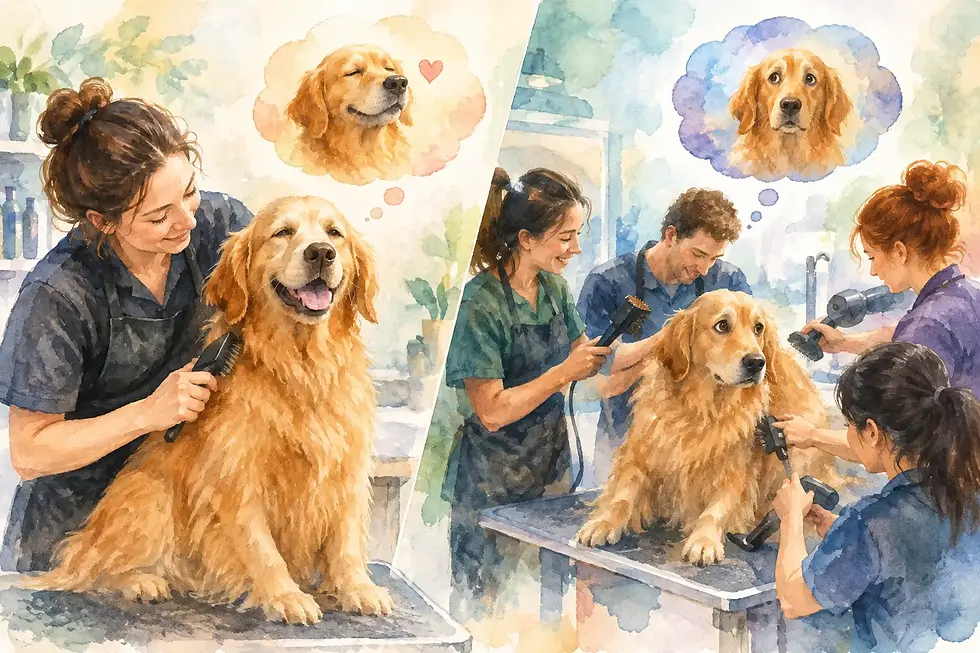
This question helps you understand the environment your dog will experience. Traditional salons may have multiple pets arriving, waiting, drying, and being groomed at once. That setup works well for some social, easygoing dogs, but it can be difficult for dogs who are sensitive to noise, confined spaces, or unfamiliar animals.
Ask whether your dog will be in a kennel, how long they may wait, and whether other pets will be present. Mobile grooming offers a more private alternative, with individualized attention and no crowded lobby or long salon stay. The best choice depends on your dog, but you deserve to know what their day will look like.
4. How do you clean and sanitize your grooming space and tools?
Cleanliness is about more than a tidy appearance. Brushes, tubs, tables, clippers, towels, and high-touch surfaces should be cleaned and sanitized between pets. Proper sanitation helps reduce exposure to dirt, parasites, skin concerns, and contagious conditions.
A quality groomer will not be vague about this. They should be comfortable explaining their cleaning routine and how they handle a pet with fleas, ticks, or a suspected skin issue. If your dog has an active medical concern, open communication with both your groomer and veterinarian is the safest route.
5. What products do you use, and can you accommodate sensitive skin?
Shampoo is not one-size-fits-all. Dogs with dry skin, allergies, frequent itching, or a heavy shedding coat may need a different approach than a dog with a healthy, low-maintenance coat. Ask what shampoo and conditioning products are included and whether the groomer can work with veterinarian-recommended products when needed.
This is also the time to ask about add-ons such as deep conditioning, deshedding treatments, flea and tick treatments, and teeth brushing. A trustworthy groomer will recommend services based on your dog's coat and skin needs, rather than treating every upgrade as essential.
Questions to Ask a Dog Groomer About the Appointment
6. What is included in the grooming package?
“Full groom” can mean different things at different businesses. Before you book, ask whether the service includes a bath, blow-dry, brushing, nail trim, ear cleaning, haircut, sanitary trim, and face and feet cleanup. If you want a specific result, such as a shorter summer trim or a breed-style groom, say so early.
Clarifying the package prevents surprises and helps the groomer schedule enough time. It also lets you compare options fairly. A lower starting price may not include the services your dog actually needs.
7. How long will the appointment take?
Timing matters, particularly for busy households and dogs who get restless away from home. Coat type, size, behavior, matting, drying time, and the requested style all affect the length of a groom. An honest groomer may provide a range rather than an exact promise.
For mobile appointments, ask what you need to do before arrival and whether the groomer needs access to a parking space, driveway, or nearby location. A well-prepared appointment is smoother for everyone, especially your dog.
8. Can I stay nearby, and how will you communicate during the groom?
Some dogs settle more easily when their people are close, while others focus better once the owner is out of sight. Ask what the groomer recommends for your dog's personality. The goal is not to insist on one rule, but to create the calmest experience possible.
Also ask how the groomer handles changes to the plan. If they find matting, a skin irritation, or a coat condition that requires extra time, they should contact you before moving forward with additional work or charges. Clear communication protects your trust and your dog's comfort.
9. What happens if my dog is matted?
Matting can hide close to the skin, particularly behind the ears, under the collar, in the armpits, and around the legs. It can pull painfully, trap moisture, and make brushing unsafe. A groomer should assess the coat in person and explain the most humane option.
In some cases, careful brushing is possible. In others, a shorter clip is kinder than prolonged dematting. Ask how the groomer evaluates matting, whether there are additional fees, and how they will keep you informed. A compassionate groomer puts your dog's well-being ahead of preserving a longer style at all costs.
10. Do you have experience with my dog's breed, coat type, and size?
Experience matters, but it is not about breed labels alone. A groomer should understand the practical needs of different coat types, from thick double coats and curly coats to fine, silky hair and short coats that shed heavily. They should also be willing to care for dogs of all breeds and sizes without discrimination.
Share recent photos if you have a particular style in mind. If your dog has a double coat, ask how the groomer manages shedding without shaving a coat that may not be suited to it. The right recommendation may not always match the shortest or trendiest look, but it should support your dog's comfort and coat health.
11. How are nails, ears, and teeth handled?
These small details are easy to overlook until they become uncomfortable. Overgrown nails can affect how a dog walks. Dirty ears may need gentle cleaning, though a groomer should refer you to a veterinarian if they notice redness, odor, discharge, or signs of infection. Teeth brushing can freshen breath and support an at-home dental routine, but it is not a substitute for veterinary dental care.
Ask what is included and how the groomer works with dogs who dislike paw handling or face work. A patient, low-pressure approach is often more valuable than forcing every task into one appointment.
12. What should I do between appointments?
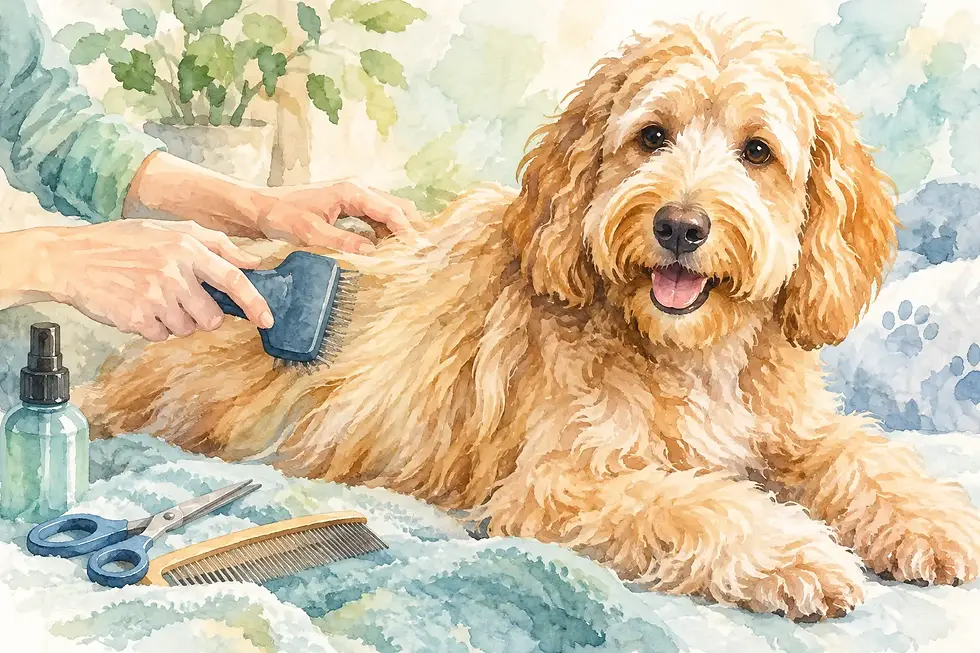
A good groomer wants your dog to feel good after they leave, not just look good for a day. Ask for realistic home-care guidance based on your dog's coat. That may include brushing frequency, the best areas to check for tangles, bathing advice, or when to schedule the next visit.
Regular grooming often prevents small problems from becoming painful ones. Dogs with curly, long, or dense coats may need more frequent maintenance than short-haired dogs, while shedding breeds can benefit from seasonal deshedding care. Your groomer can help set a schedule that fits your dog rather than selling a generic timetable.
The best grooming relationship feels like a partnership: you know your dog best, and a skilled groomer brings trained eyes, gentle hands, and practical care. At The Wag Works, that partnership starts with a calm, one-on-one conversation about what will help your dog feel their best - because wagging tails are our business. Literally!
Comments