
8 Best Ways to Reduce Grooming Stress
The shaking starts before the car keys even jingle. For many dogs, grooming stress does not begin on the table - it starts with the ride, the noise, the unfamiliar smells, and the anticipation of being handled in a busy space. That is why the best ways to reduce grooming stress usually have less to do with one quick trick and more to do with the full experience around the appointment.
A calmer grooming experience is possible, but it often takes a little planning and a lot of attention to what your dog is actually reacting to. Some dogs fear the dryer. Some struggle with nail trims. Others are overwhelmed by crowded salons or long waits in kennels. The good news is that stress can often be reduced when grooming is approached with patience, predictability, and the right environment.
Why grooming feels stressful for some dogs
Grooming asks a lot from a dog. They are expected to stand still, tolerate touch in sensitive areas, hear loud tools, and cooperate with unfamiliar routines. Even dogs with sweet temperaments can find that combination hard.
Age, health, coat type, and personality all play a role. A puppy may be nervous because everything is new. A senior dog may feel stiff or sore during brushing or bathing. A rescue dog may have had rough handling in the past. And some dogs simply do better in quiet, one-on-one settings than they do in stimulating environments with other pets nearby.
That is why a low-stress approach should be tailored, not rushed. What works beautifully for one dog may not work for another.
Best ways to reduce grooming stress before the appointment
One of the most effective changes happens before grooming even begins. Dogs tend to feel safer when the day is predictable. If your pet is already anxious, avoid stacking stressful events together. A crowded outing, a long errand run, and then a grooming appointment can be too much.
Try to keep the morning calm. Give your dog time for a potty break and a little movement so they are not arriving with pent-up energy. Keep your own tone relaxed too. Dogs are excellent at reading tension, and when owners feel rushed or worried, pets often pick up on it.
It also helps to get dogs comfortable with gentle body handling at home. Touch the paws, ears, legs, and face in short, calm sessions. Follow with praise or a treat. This does not replace professional grooming, but it can build tolerance for the kinds of contact grooming requires.
If your dog has very specific triggers, share them ahead of time. A groomer should know if your pet hates the dryer, panics for nail trims, has skin sensitivity, or gets carsick. That kind of information matters because stress prevention is always easier than stress recovery.
Create positive associations with grooming
Dogs do not need to love every part of grooming to learn that it is safe. The goal is not perfection. The goal is reducing fear.
Start small at home if your dog is uneasy. Let them sniff the brush without pressure. Turn on an electric toothbrush or similar low-level sound nearby if they are sound-sensitive, then reward calm behavior. Brief exposure paired with positive reinforcement can help make grooming-related sensations feel less alarming over time.
Timing matters here. A five-minute success is more valuable than a twenty-minute struggle. If your dog starts to tense up, pull away, or show signs of distress, that is useful information. Pushing past that point often makes the next session harder.
For dogs with deeper anxiety, progress may be slow. That is okay. Gentle consistency usually beats occasional marathon sessions.
The environment matters more than people think
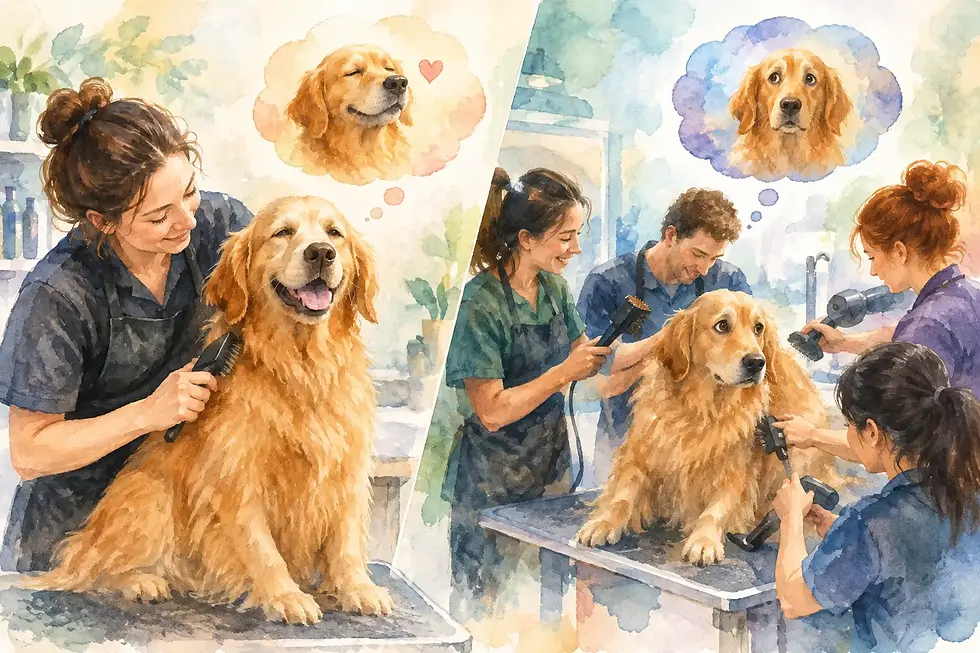
If a dog dreads grooming, the setting may be part of the problem. Busy salons can be overwhelming for pets that are sensitive to barking, movement, smells, or separation from their owners. Add transportation and waiting time, and stress can build before the bath ever starts.
For many dogs, one of the best ways to reduce grooming stress is removing those extra stressors. A quieter, cage-free, one-on-one setup can make a meaningful difference because it limits noise, avoids crowded holding areas, and allows the dog to be the clear focus.
This is especially true for dogs that struggle with car rides or become overstimulated around other animals. In those cases, convenience is not just nice for the owner - it can directly support the dog’s comfort level. The Wag Works was built around that idea, with individualized care designed to keep the experience calmer from start to finish.
Gentle handling changes everything
Technique matters. Dogs notice the difference between firm, confident handling and rough, hurried handling. A calm groomer who works with the dog instead of against them can lower tension quickly.
That does not mean every appointment will be easy. Some coats are matted. Some dogs are frightened. Some services, like nail trimming or de-shedding, can test a dog’s patience. But even when a task is challenging, the approach should still feel measured and safe.
Breaks can help. So can changing the order of services. A dog who melts down during nail trimming may do better if that step happens later, after they have had time to settle. Another dog may need the opposite. There is no single formula, which is why individualized care matters so much.
Keep the coat maintained between appointments
A dog with tangles, mats, overgrown nails, or packed undercoat is more likely to feel discomfort during grooming. Stress is not always emotional. Sometimes it is physical.
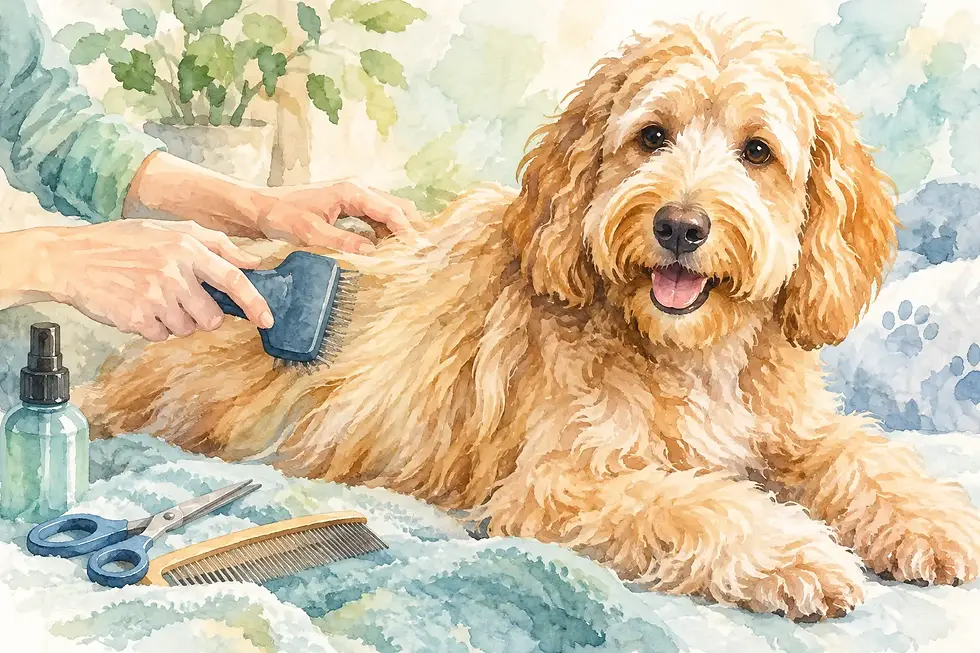
Regular brushing at home can help prevent painful pulling and reduce the amount of work needed during professional appointments. Keeping up with coat maintenance is particularly important for doodles, double-coated breeds, and dogs with longer hair around the ears, feet, and sanitary areas.
That said, home maintenance should match your dog’s tolerance and your skill level. Daily wrestling with a brush can do more harm than good if it becomes a battle. In some homes, a simple routine of light brushing and regular professional appointments is the better answer.
Pay attention to timing and frequency
A dog that goes too long between appointments may have a harder time each visit. When grooming becomes infrequent, the process often takes longer and includes more uncomfortable coat or nail work. That can make the whole experience feel bigger and more stressful.
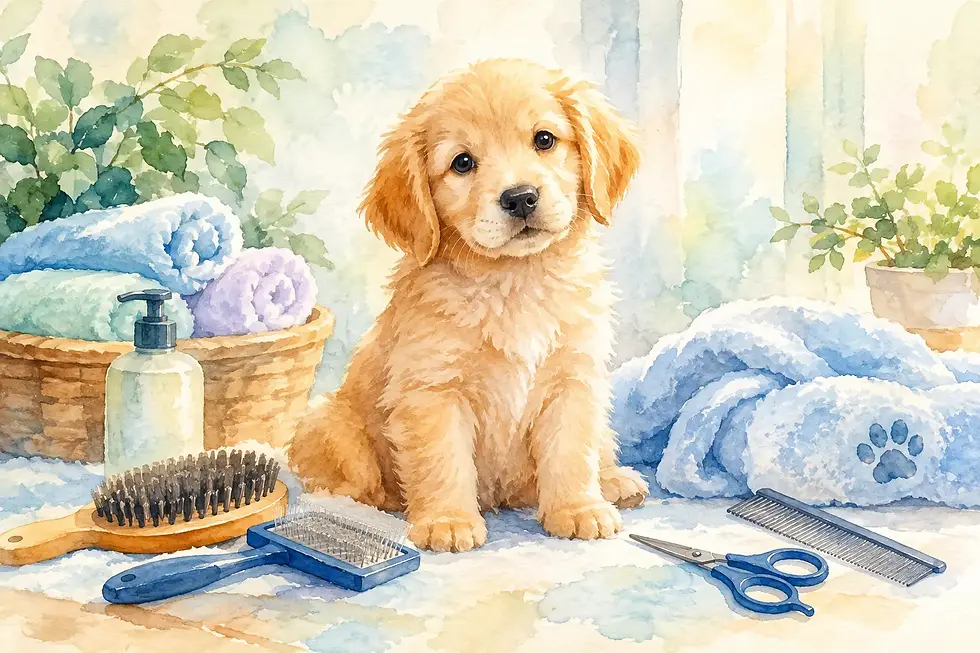
A consistent schedule tends to help. Dogs often settle better when grooming becomes familiar rather than occasional and intense. Puppies benefit from short, positive introductions early. Adult dogs with established anxiety often improve when visits are predictable and spaced appropriately.
There is a trade-off, of course. Some owners worry that more frequent appointments will feel like more disruption. But in practice, shorter, routine visits are often easier on the dog than waiting until grooming becomes overdue.
Watch for signs that stress is becoming too much
Not all stress looks dramatic. Some dogs shake, pant, or try to escape. Others freeze, drool, yawn repeatedly, or become unusually quiet. Those softer signs are easy to miss, but they still matter.
If your dog consistently seems distressed before, during, or after grooming, it may be time to adjust the plan. That could mean changing the environment, shortening the appointment, spacing services differently, or talking with your vet if pain or medical issues might be contributing.
Skin irritation, ear infections, arthritis, and dental discomfort can all make grooming harder. When a dog suddenly becomes resistant to a part of grooming they previously tolerated, there may be more going on than attitude.
Best ways to reduce grooming stress for anxious dogs
Anxious dogs usually need more than a standard appointment slot. They benefit from fewer transitions, less waiting, and a groomer who is willing to read body language instead of forcing speed.
For these dogs, familiarity helps. Seeing the same groomer regularly can build trust. A quieter appointment time or a private setting can lower their baseline stress. Some do best with only the services they truly need that day, rather than pushing for a full package when they are already struggling.
Owners can help by being honest about behavior. It is tempting to say, "He just gets a little nervous," when the reality is that nail trims are a full event. Clear information allows a groomer to prepare and respond appropriately. That is part of protecting your dog, not labeling them.
A good grooming plan should support the dog in front of you, not the ideal version of them. Some pets will eventually relax into the process. Others may always need extra patience and a lower-stimulation experience. Both are normal.
Grooming does not have to feel like a showdown. With the right setting, calm handling, and a schedule that respects your dog’s limits, it can become one more part of good care instead of a source of dread. Sometimes the kindest thing you can do is stop asking your dog to power through an environment that was never a good fit in the first place.
Comments