
Dog Grooming for Car Ride Anxiety
The stress often starts before grooming even begins. If your dog trembles when the keys jingle, pants the entire drive, drools in the back seat, or refuses to get into the car at all, dog grooming for car ride anxiety is not a small preference - it is a real comfort issue that affects the whole experience.
For many dogs, the hardest part of a grooming appointment is not the bath, the brush-out, or the trim. It is the trip. A car ride can stack stress fast, especially for dogs who already feel unsure about new places, loud sounds, motion, or separation from home. By the time they arrive at a traditional salon, they may already be overstimulated.
Why car rides make grooming harder
Some dogs dislike the physical feeling of riding in a vehicle. Motion can trigger nausea, pacing, whining, drooling, or vomiting. Others are less bothered by the movement itself and more distressed by what the car ride predicts. If every trip ends at the vet, boarding facility, or busy grooming shop, the car becomes a warning sign.
That matters because grooming works best when a dog can stay as calm and cooperative as possible. An anxious dog may resist handling, pull away during brushing, struggle for nail trims, or have a much harder time settling for drying and clipping. Even very sweet dogs can become tense when they feel trapped, rushed, or overstimulated.
This does not mean those dogs are bad candidates for grooming. It usually means the setup needs to work better for them.
Dog grooming for car ride anxiety works best when stress is removed early
When owners think about low-stress grooming, they often focus on what happens during the appointment. That is important, but for a dog with travel anxiety, the biggest improvement may come from removing the drive altogether.
A calm experience starts with fewer transitions. No loading into the car. No long ride. No unfamiliar lobby. No barking room full of other dogs. No waiting in a crate for a turn. Instead, the dog stays in a familiar environment until the appointment begins. That change alone can lower the emotional temperature.
For some dogs, a quieter one-on-one grooming setup leads to better behavior because they are not carrying all that travel stress into the service. For others, the difference is more physical. Dogs prone to car sickness are less likely to arrive nauseated, shaky, or exhausted when transportation is not part of the process.
Signs your dog may need a different grooming approach
Car ride anxiety is not always dramatic. Some dogs shake and cry as soon as the engine starts. Others seem manageable in the car, then unravel once they arrive. Owners in North Georgia often tell us the same thing: their dog is fine at home, but everything changes once the grooming errand starts.
A few common signs stand out. Your dog may hide when the leash comes out, plant their feet at the car door, pant heavily during short trips, or seem unusually clingy before appointments. After grooming, they may come home drained, edgy, or reluctant to get back in the car the next time.
If that sounds familiar, it is worth looking at the full chain of events rather than judging the grooming itself. Sometimes the issue is not the bath. It is the buildup.
What to look for in grooming for anxious dogs
A lower-stress option is not just about convenience, though convenience certainly helps busy families. The real question is whether the grooming setup reduces avoidable triggers.
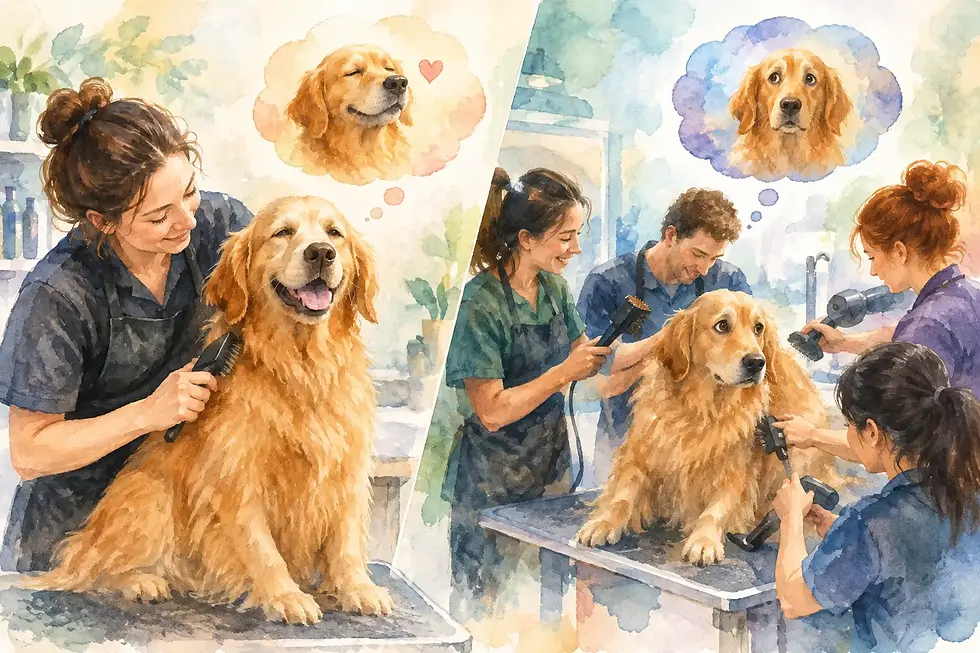
One-on-one handling can make a meaningful difference. Dogs that struggle with noise, crowding, or unfamiliar animals often do better when the focus stays on them instead of on a room full of appointments. A cage-free approach can help as well, especially for dogs who become more upset when confined in a strange place.
Cleanliness and predictability matter too. A fully sanitized grooming space, consistent routines, and gentle handling all support a calmer experience. So does working with a groomer who understands that anxious behavior is communication, not stubbornness.
This is also where mobile grooming fits naturally for many households. When grooming comes to your home, your dog avoids the car ride and the overstimulating salon environment at the same time. That combination can be a real relief.
Preparing your dog for a low-stress appointment
Even when the travel piece is removed, a little preparation helps. Dogs read household energy quickly, so a rushed handoff can still make them uneasy. If possible, keep the morning calm and predictable. Give your dog time for a bathroom break before the appointment and avoid amping them up with frantic energy or last-minute chasing around the house.
It also helps to share honest details with your groomer. If your dog hates having their feet touched, gets nervous around dryers, or tends to panic when separated, say so upfront. Those details are not embarrassing. They are useful. A good groomer can adjust pacing, handling, and expectations when they know what your dog struggles with.
Some owners assume a full makeover is the goal every time. For anxious dogs, it depends. Sometimes a tidy, comfortable groom completed with less stress is the better outcome than pushing through every possible add-on in one visit. The best plan balances coat care, hygiene, and emotional comfort.
When car sickness and anxiety overlap
There is often a gray area between true motion sickness and fear. A dog may drool and pant because the ride makes them nauseated, or because they are anticipating something stressful, or both. The symptoms can look similar.
That overlap is one reason grooming appointments tied to car travel can become such a problem. If a dog feels sick during the ride and then has a difficult experience afterward, they can start associating the entire process with discomfort. Over time, even pulling out of the driveway may trigger stress.
In those cases, removing the drive is not a luxury. It can be part of breaking the cycle. If your dog also shows signs of severe car sickness in everyday travel, it is worth speaking with your veterinarian. Grooming can be made easier, but persistent nausea deserves medical guidance.
Why the environment matters as much as the groom
A lot of owners have been told their dog is just nervous, as if that should be pushed aside. But environment shapes behavior. A dog that struggles in a busy salon may do much better in a quieter, more controlled setting.
That does not mean every anxious dog needs the exact same solution. Some dogs can improve with training and short practice rides. Some tolerate the car but dislike crowded spaces. Others need both travel removed and the grooming environment simplified. It depends on what is triggering them most.
For dogs who are sensitive, older, reactive, recovering from illness, or simply overwhelmed by traditional grooming routines, private care tends to offer more breathing room. There is less buildup, less waiting, and less sensory overload. That is often where better grooming behavior starts.
A better fit for busy owners too
There is a practical side to all of this. If your dog dreads the car and you have to rearrange your day around drop-off, pickup, and cleanup after a stressful ride, grooming becomes a chore for everyone. That friction causes many owners to delay appointments longer than they should.
When care is easier to keep up with, dogs benefit. Coats stay healthier. Nails are less likely to overgrow. Skin issues are easier to spot. Sanitary trims and deshedding can happen on a schedule that supports comfort instead of waiting until things feel urgent.
That is one reason mobile grooming has become such a strong fit for anxious pets and their people. For families in North Georgia who want professional grooming without the stress of transportation and salon chaos, The Wag Works offers a calmer path that keeps comfort at the center.
The goal is not perfection. It is a calmer experience.
If your dog has car ride anxiety, the answer is not to force them through more stress and hope they get used to it. Sometimes they do improve with time. Sometimes they do not. Either way, grooming should support their well-being, not test their limits every few weeks.
A dog who can stay closer to home, avoid the ride, and receive individualized care often has a better chance of feeling safe enough to cooperate. That makes the appointment easier on your dog, easier on you, and easier on the groomer too.
When the trip is the problem, changing the route can change everything.

Comments