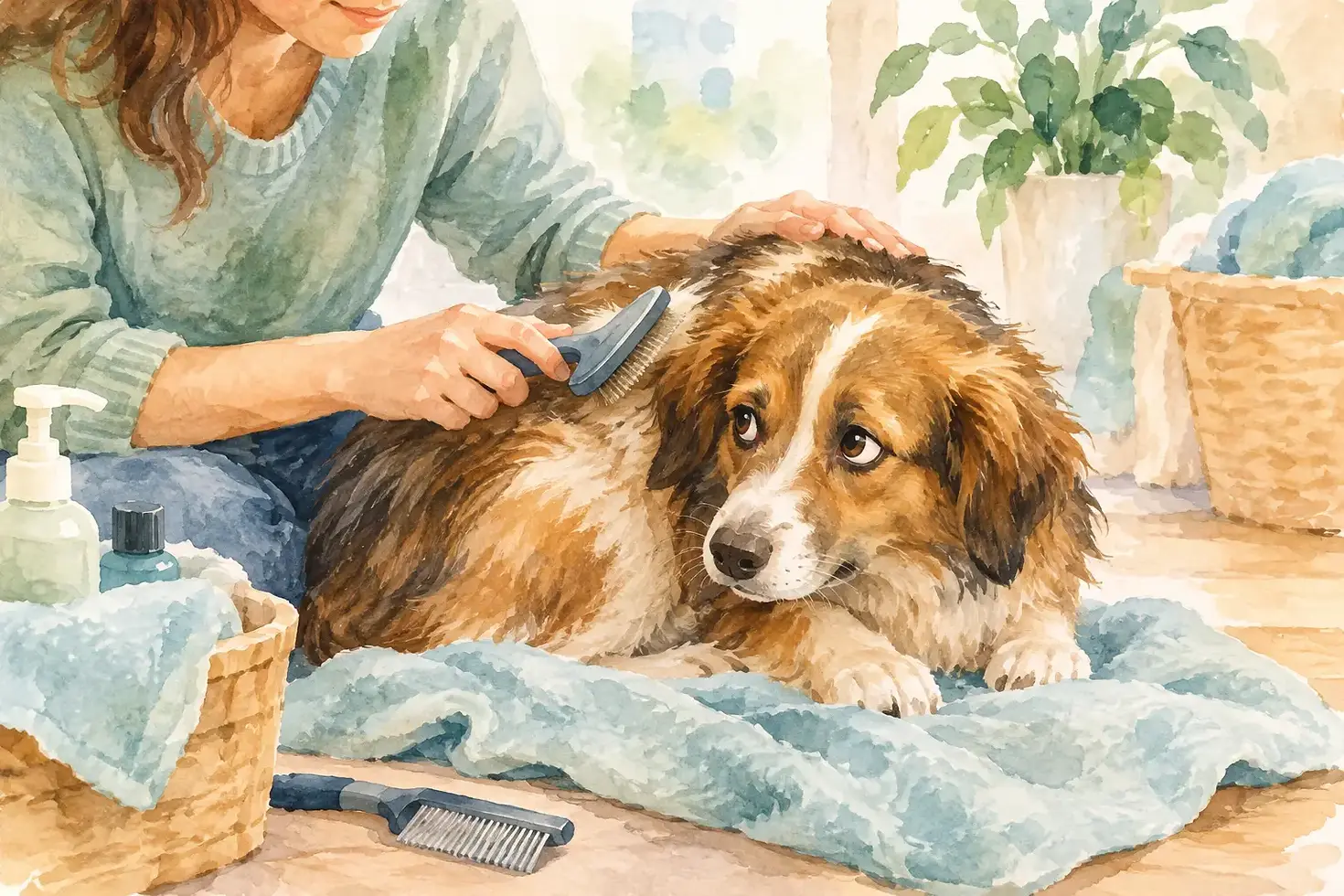
A Guide to Grooming Fearful Dogs at Home
The moment a dog sees the brush, hears nail clippers, or watches the car pull into a salon parking lot, fear can take over. A good guide to grooming fearful dogs starts with one simple goal: helping your dog feel safe enough to participate, rather than forcing them to endure the appointment.
Fearful dogs are not being difficult. They may be reacting to a past bad experience, unfamiliar handling, physical discomfort, loud sounds, or the rush of a busy grooming environment. With patience, thoughtful preparation, and the right level of professional support, grooming can become more manageable for both of you.
Start by Reading Your Dog’s Stress Signals
Fear does not always look like growling or snapping. Many dogs show quieter signs long before they reach their limit. They may turn their head away, lick their lips, yawn when they are not tired, tuck their tail, freeze, tremble, pant heavily, or resist being touched in one particular area.
Pay close attention to when those signals appear. Is it when you pick up a brush? When your dog is lifted onto a table? When water touches their face? Knowing the trigger helps you change the process instead of assuming your dog simply dislikes grooming.
A fearful dog needs room to communicate. If they pull away, stiffen, or become increasingly distressed, pause rather than trying to finish the task quickly. Pushing through fear can make the next grooming session harder and can create a genuine safety risk for your dog and the person handling them.
Guide to Grooming Fearful Dogs: Build Trust Before the Appointment
The best grooming progress often happens between appointments. Short, positive practice sessions can teach your dog that grooming tools and gentle handling do not always lead to something scary.
Begin with the easiest possible version of the task. Let your dog see a brush, then offer calm praise or a small treat. Touch the brush to their shoulder for one second, reward, and stop. Over several short sessions, gradually add a few gentle strokes. The same approach works for handling paws, lifting ears, touching the muzzle, or standing still on a nonslip surface.
Keep these sessions brief enough that your dog stays comfortable. Two successful minutes are more valuable than 20 tense minutes. If your dog is too worried to take food, is trying to escape, or is becoming rigid, the step is too difficult. Go back to something easier.
It also helps to separate grooming sounds from grooming tasks. Turn on an electric toothbrush or a clipper at a distance while your dog enjoys a treat or rests nearby. Do not immediately use it on their body. The goal is to make the sound familiar before asking your dog to tolerate the sensation.
Make the Day Feel More Predictable
Dogs that struggle with grooming often benefit from a quiet, steady routine. Avoid scheduling a session right after a stressful car ride, a crowded event, or an energetic playdate. Give your dog time for a potty break and a chance to settle before grooming begins.
At home, choose a calm space with secure footing and good lighting. A slippery floor can make an already nervous dog feel unsteady. Keep children, other pets, and unnecessary activity out of the area when possible. Your relaxed presence matters, too. Reassure your dog in a normal, gentle voice, but avoid repeatedly saying, “It’s okay,” in a worried tone that may signal something is wrong.
For professional grooming, share your dog’s history before the appointment. Explain what has been difficult, what has helped, whether your dog has sensitive areas, and how they respond to strangers, water, dryers, brushes, or nail trims. Details are not embarrassing. They give the groomer a clearer path to safer handling.
Choose Comfort Over a Perfect Finish
A polished haircut is never worth overwhelming a dog. Fearful dogs may need shorter appointments, breaks between services, or a gradual plan that tackles one concern at a time. A bath and brush-out may be enough for one visit; nails, face trimming, or a full haircut may need to wait until your dog has more confidence.
This can be especially true with mats. Severe matting can pull at the skin and cause real discomfort, but removing it may require close clipper work that feels frightening to a sensitive dog. A compassionate groomer will weigh coat condition, the dog’s stress level, and safety rather than promising a particular style at any cost.
Drying is another common challenge. Some dogs tolerate towel drying well but become alarmed by high-velocity dryers. Others are comfortable with the sound once they are introduced slowly. There is no one right process for every dog. The best plan is the one that keeps your dog clean, comfortable, and able to build a better association with grooming over time.
Find a Low-Stress Grooming Setting
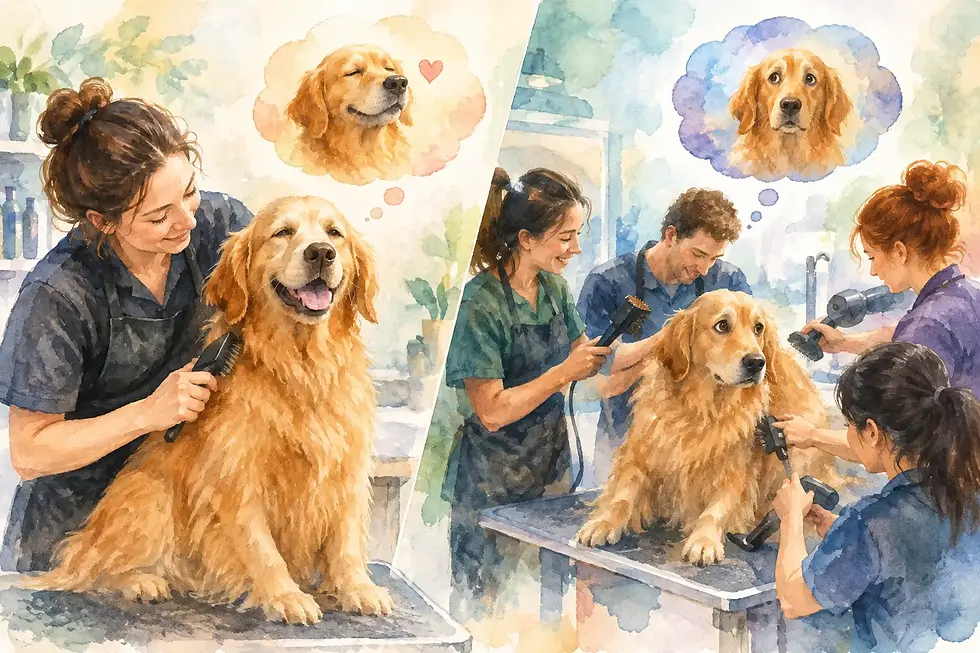
For dogs who fear car rides, crowded lobbies, barking dogs, cages, or long waits, the grooming environment can be as important as the groomer’s technique. A one-on-one mobile appointment can reduce many of those triggers by eliminating the traditional salon routine and allowing your dog to receive focused care without a room full of unfamiliar animals.
Ask practical questions before booking. Find out whether pets are groomed one at a time, how the space is cleaned and sanitized, whether breaks are available, and how the groomer handles a dog who needs more time. You should also ask about insurance, safety practices, and whether the business welcomes all breeds. These details help you choose care based on your dog’s needs, not just convenience.
At The Wag Works, individualized, cage-free grooming is designed to give dogs a calmer experience at the doorstep, with professional equipment and focused attention. For a fearful dog, fewer transitions and less stimulation can make a meaningful difference.
Keep Handling Gentle and Clear
Fearful dogs respond best to calm, deliberate handling. Avoid sudden grabs, repeated restraint, raised voices, or trying to “show them who is boss.” Those approaches can intensify panic and may make a dog more likely to defend themselves.
Instead, give your dog simple information. Let them see and sniff the tool. Touch an area briefly. Pause. Reward calm behavior when it happens. If a paw is especially difficult, start by rewarding your dog for letting you touch their shoulder, then their leg, then the paw for a second. Progress may feel slow, but it is more likely to last.
Food rewards can help, but use them thoughtfully. Choose small, easy-to-eat treats and offer them for calm cooperation, not after your dog has already reached a point of panic. If your dog has dietary restrictions or becomes too excited around food, gentle praise and short breaks may work better.
Know When to Involve Your Veterinarian
Sudden fear during grooming can sometimes point to pain. Ear infections, dental problems, arthritis, skin irritation, injured nails, and sore joints can make everyday handling unbearable. If your dog used to tolerate grooming but has recently started reacting, a veterinary check is a wise first step.
Your veterinarian can also help if anxiety is severe enough that grooming cannot be completed safely. Some dogs may benefit from a behavior plan, pain treatment, or veterinarian-prescribed medication for specific appointments. Do not give your dog sedatives or calming products without professional guidance. What is safe and effective depends on your dog’s age, health, weight, and medical history.
A muzzle may also be appropriate in some situations, but it should never be used as punishment or as a way to force a terrified dog through a long session. When introduced positively and used correctly, it can be one safety tool within a larger, compassionate plan.
Give Progress Time
A dog who has been afraid of grooming for months or years may not become comfortable in one visit. Look for smaller wins: taking treats near the brush, standing calmly for a few strokes, allowing one nail to be trimmed, or recovering more quickly after a dryer is switched on.
Those wins add up. Each appointment that ends before your dog is overwhelmed helps teach them that grooming has a limit, that their signals are heard, and that they can get through it safely. With steady care, the goal is not simply a cleaner coat. It is a dog who feels more secure each time they are handled.
Comments