How to Prevent Dog Matting Between Grooms
That little tangle behind your dog’s ear can turn into a tight, uncomfortable mat faster than most pet parents expect. For dogs with longer, curly, double, or silky coats, keeping up with coat care between appointments is about much more than looking tidy. It helps protect their skin, comfort, movement, and overall well-being.
Learning how to prevent dog matting between grooms does not require a complicated routine or hours of brushing every day. It does require consistency, the right technique, and a gentle approach that keeps grooming time calm for your dog.
Why mats form so quickly
Mats form when loose hair twists around healthy hair and becomes compacted. Friction, moisture, dirt, shedding, and certain coat types can speed up the process. A dog can look smooth along their back while hidden mats are already developing underneath.
Common trouble spots include behind the ears, under the collar or harness, in the armpits, around the tail, between the back legs, and anywhere hair rubs together while your dog walks or lies down. Curly-coated breeds such as Poodles and Doodles, as well as long-coated breeds and heavy shedders, often need more frequent coat checks. Still, any dog can mat, especially after a rainy walk, swim, muddy play session, or a few busy weeks without brushing.
A mat is not simply a knot. As it tightens, it can pull on the skin with every movement. Severe matting may trap moisture and debris, hide irritation or parasites, and make professional grooming uncomfortable. Catching tangles while they are small is one of the kindest things you can do for your dog.
Prevent dog matting between grooms with a simple routine
The best routine is the one you can realistically keep. For many dogs, five to 10 calm minutes several times a week is more effective than one long brushing session once a month. Dogs with dense or curly coats may need a brief daily check, while short-coated dogs can often be checked less often.
Choose a relaxed moment, such as after dinner or before settling in for the evening. Let your dog stand, lie down, or sit in the position that feels most comfortable. Offer praise, work in short sections, and stop before your dog becomes frustrated. If your pet is new to brushing, begin with just a minute or two and build from there.
Consistency also helps your dog see coat care as a normal part of life rather than something to brace against. That matters especially for anxious dogs or dogs who have had painful tugging in the past.
Use tools that match your dog’s coat
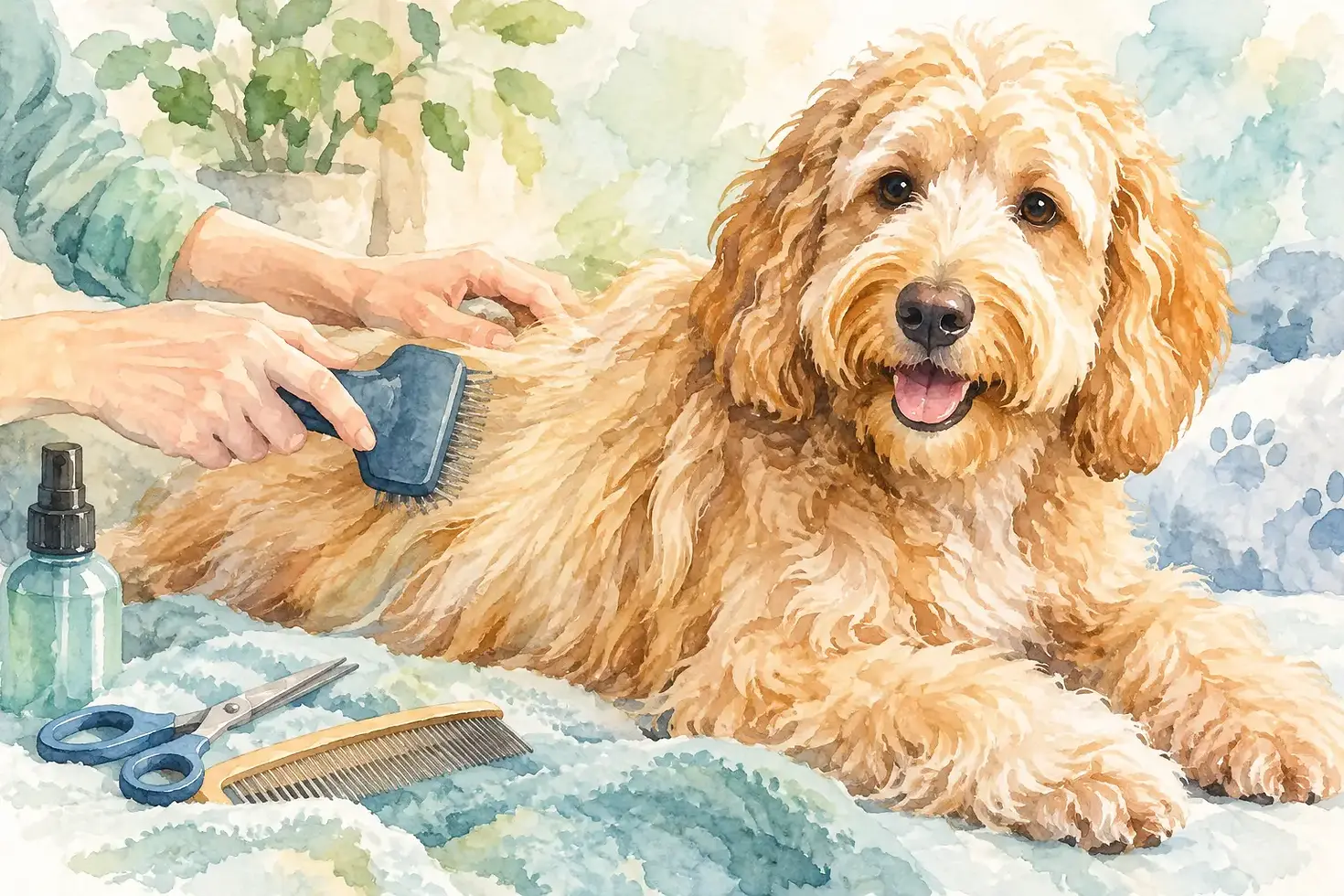
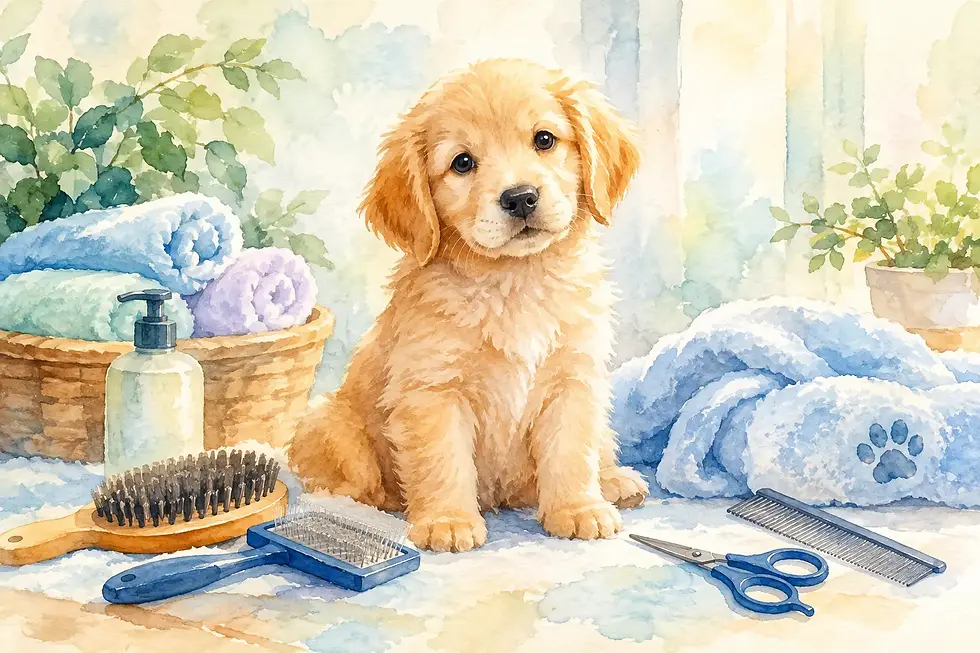
One brush is not perfect for every dog. A slicker brush can be helpful for many curly, medium, and long coats because it reaches through loose hair. A metal comb is essential for checking your work, particularly near the skin. For thick double coats, an appropriate undercoat tool may help remove shed hair when used gently and in moderation.
Your professional groomer can recommend tools for your dog’s coat, length, and grooming schedule. This is worth asking about because the wrong tool can either miss the developing mat or scratch the skin. Avoid pulling a brush through a tight knot with force. If it does not move easily, pause and reassess.
Brush all the way to the skin
Surface brushing is one of the biggest reasons hidden matting goes unnoticed. The top layer may look fluffy and smooth while compacted hair sits close to the skin underneath.
Try line brushing. Starting at a low area of the body, gently part the coat with one hand and brush a small section of hair at a time. Work outward and upward in thin layers rather than brushing over the top of the coat. Follow with a metal comb. If the comb glides from the hair ends down to the skin without catching, that section is generally clear.
Be extra gentle around tender areas. Hold the hair above a small tangle near the skin so your dog does not feel the pull, then work from the ends toward the base in small strokes. A light detangling spray made for dogs may provide enough slip for a minor tangle. Never use household conditioner, human detangler, or scissors close to the skin. Dog skin is thin, and mats can pull skin up into the knot where it is very easy to accidentally cut.
Check the places mats like to hide
A quick hands-on check can make a major difference. Run your fingers behind the ears, beneath the collar, under each front leg, around the chest, and through the feathering on the legs and tail. Feel for dense patches, tight clumps, or areas that seem thicker than the surrounding coat.
Collars and harnesses deserve special attention. Remove them during a coat check when it is safe to do so, then brush and comb beneath the contact area. If your dog wears a harness on walks every day, that friction zone may need attention more often than the rest of the body.
Keep the face, feet, and sanitary areas clean and dry as well. Food around the muzzle, wet grass between the toes, and moisture after potty breaks can all encourage small tangles to bind together.
Drying matters after baths, rain, and swimming
Water does not cause every mat, but wet hair is more likely to twist and tighten as it dries. A dog who gets damp and then air-dries in a thick coat can develop knots surprisingly quickly, especially in the legs, chest, and belly.
After a bath, use dog-safe shampoo and rinse thoroughly. Leftover product can make the coat feel heavy or tacky. Towel dry by gently pressing rather than vigorously rubbing, which can create tangles. Then dry the coat fully while brushing in manageable sections if your dog tolerates it.
For dogs who swim, play in creeks, or get caught in North Georgia rain, make a post-adventure coat check part of the routine. You do not always need a full bath, but you should remove leaves, burrs, mud, and dampness before they become a problem.
Know when to call your groomer
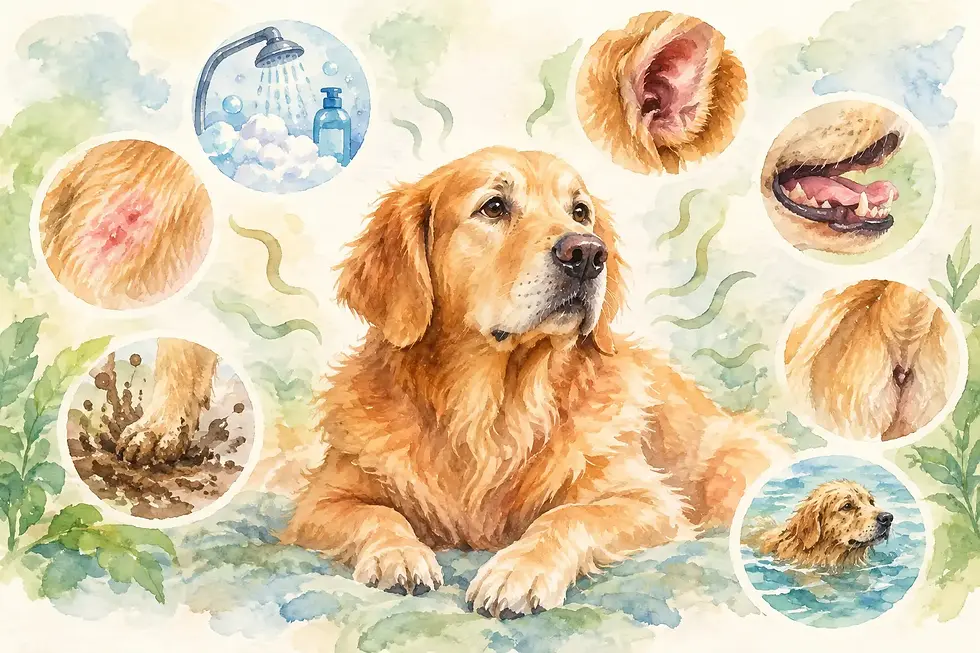
Small tangles are usually manageable with patience. Larger, tight, or skin-close mats are a different situation. If your dog flinches, pulls away, licks at the area, has redness, odor, moisture, or a sore beneath the coat, stop working on it at home. Trying to brush out a painful mat can damage trust and make future grooming harder.
A professional groomer can assess the coat safely and choose the kindest option. Sometimes a careful brush-out is appropriate. Other times, clipping a matted area shorter is the most comfortable and humane choice. The goal is never to preserve length at the expense of your dog’s skin and comfort.
Regular professional appointments also make at-home maintenance far easier. A manageable trim around the face, feet, and sanitary areas can reduce daily cleanup, while a coat length that fits your family’s schedule can make a real difference. A groomer should work with you, not pressure you into a style that is unrealistic to maintain.
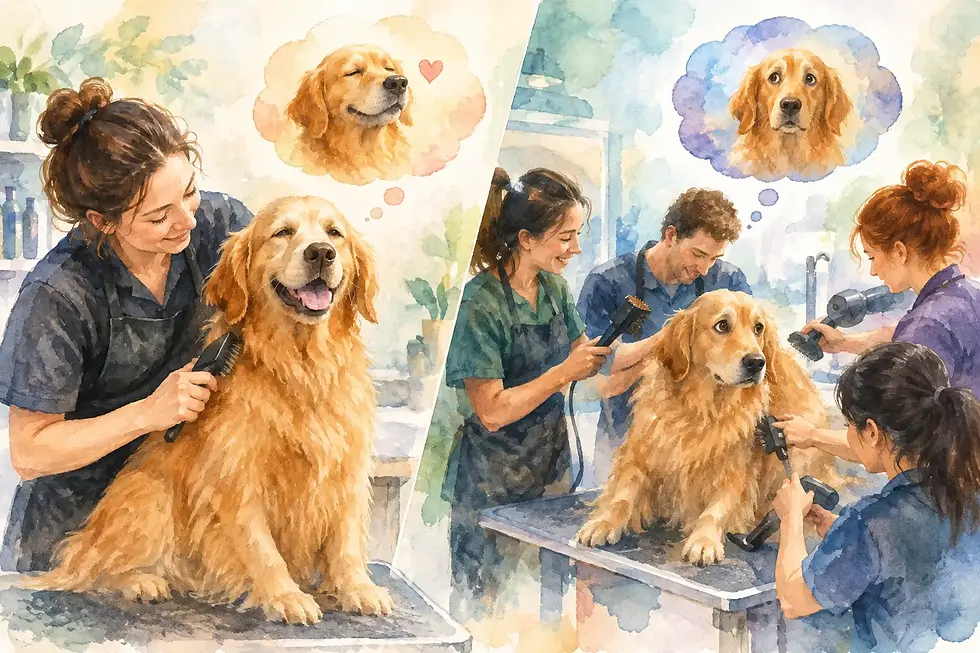
For dogs who find car rides, crowded salons, or long waits stressful, a one-on-one mobile appointment can be especially helpful. The Wag Works provides a calm, cage-free grooming experience at your doorstep, with individualized attention that supports both coat health and your dog’s comfort.
Make coat care a comfort ritual
Your dog does not need a perfect show coat to be healthy and happy. They need a coat that is clean, dry, comfortable, and free from painful pulling. Keep your sessions short, check the hidden friction spots, and ask for help before a small tangle becomes a difficult mat.
A few gentle minutes of care throughout the week can mean more comfortable walks, easier grooming appointments, and one very relieved wagging tail.
Comments