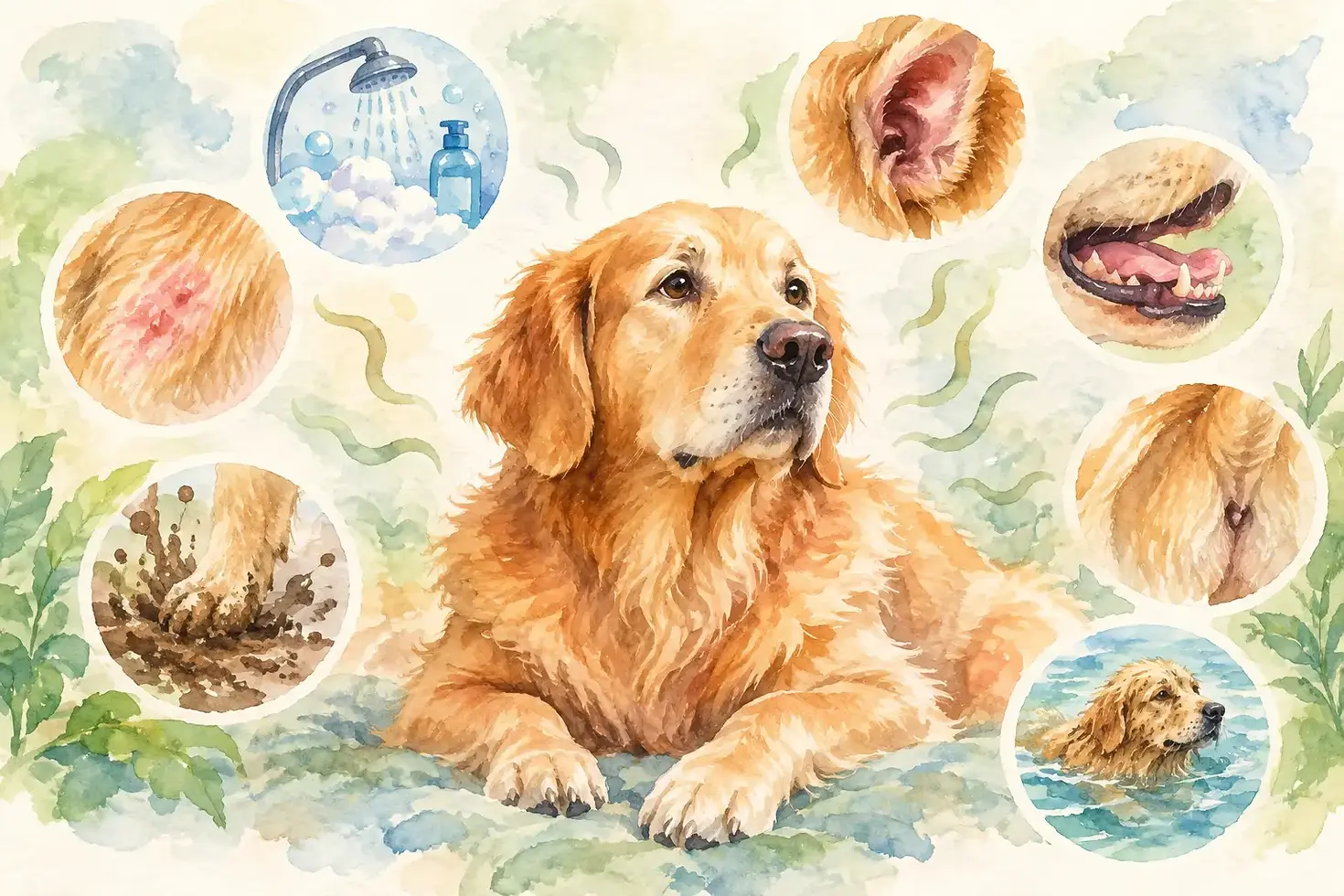
What Causes Dog Coat Odor? 8 Common Reasons
That familiar “dog smell” can show up quickly after a rainy walk, a swim, or a few busy weeks between baths. But what causes dog coat odor when the smell is strong, returns right after grooming, or seems different from your dog’s usual scent? Often, the answer is more than the coat itself. Skin health, ears, teeth, moisture, and grooming habits can all play a role.
A clean dog should still smell like a dog, especially after time outside. The goal is not a heavily perfumed coat. It is a fresh, comfortable dog with clean skin, a thoroughly dried coat, and no underlying issue causing persistent odor.
What Causes Dog Coat Odor?
Dogs naturally produce skin oils that help protect the skin and coat. Those oils can collect dirt, dander, pollen, and bacteria over time, particularly in dense or double coats. When moisture enters the picture, the smell can become much more noticeable.
Some odor is normal and temporary. A wet dog, for example, may smell stronger because water releases odor-causing compounds that are already present on the skin and coat. A quick towel-off helps, but a full dry is what makes the biggest difference.
Persistent, sour, yeasty, fishy, or unusually foul odor is different. It can point to a grooming need, but it may also signal irritation, infection, dental disease, or another concern that deserves a veterinarian’s attention.
1. A Damp Coat That Never Fully Dries
This is one of the most common reasons a dog smells musty. Long-haired dogs, curly coats, and thick double coats can hold moisture close to the skin long after they look dry on the surface. Bath time, rain, lake days, and even damp grass can create the problem.
Moisture gives naturally occurring bacteria and yeast an environment where they can multiply. The result may be a mildew-like, sour, or “corn chip” smell, especially around the belly, paws, underarms, beard, and skin folds.
At home, towel-dry thoroughly after wet weather and make sure the underside of the body and paws are not left damp. After a bath, use pet-safe drying methods and avoid putting a dog away in a crate, bed, or sweater while the coat is still wet. Professional grooming helps because the coat can be washed, rinsed, brushed out, and dried all the way to the skin.
2. Oil, Dirt, and Product Buildup
Not every smelly coat is dirty in an obvious way. Natural oils, loose undercoat, outdoor debris, saliva, and old grooming products can build up gradually. Dogs that love rolling in grass, playing at the park, or lounging on upholstered furniture may collect more odor between appointments.
Bathing too rarely can allow buildup to linger, but bathing too often with the wrong shampoo can strip the skin and trigger dryness or excess oil production. The right schedule depends on your dog’s coat type, activity level, skin condition, and veterinarian guidance. A short-coated indoor dog may need less frequent bathing than an active doodle, a shedding breed, or a dog with a beard that catches food and water every day.
A professional groomer can help keep the coat manageable without overdoing harsh cleansing. Conditioning, deshedding, and a proper brush-out are not just cosmetic steps. They remove loose hair and buildup that can trap odors close to the skin.
3. Yeast or Bacterial Skin Problems
A persistent odor that returns soon after a bath may be coming from the skin. Yeast overgrowth often has a sweet, musty, or sour smell. Bacterial skin infections can smell stronger and may come with redness, bumps, flakes, greasy fur, darkened skin, or frequent scratching.
Dogs with allergies are especially prone to skin trouble because licking and scratching weaken the skin barrier. Skin folds, the groin, underarms, neck area, and spaces between the toes are common trouble spots. Breeds with wrinkles or dense coats may need extra attention in these areas, but any dog can develop irritation.
Do not try to cover up a persistent skin odor with fragrance sprays. If you notice itching, hair loss, sores, redness, discharge, or a sudden change in smell, schedule a veterinary visit. Your veterinarian can identify whether yeast, bacteria, parasites, allergies, or another condition is involved and recommend appropriate treatment.
4. Smelly Ears That Seem Like Coat Odor
Sometimes the coat gets blamed when the smell is actually coming from the ears. Ear odor can be yeasty, sweet, waxy, or pungent, and it may transfer to the fur around the head when your dog scratches or shakes.
Healthy ears should not have a strong odor. Head shaking, pawing at the ears, redness, dark debris, discharge, or tenderness are all reasons to call your veterinarian. Ear infections can be painful, and cleaning an infected ear with random products may make matters worse.
During grooming, the hair around the ears and face can be kept clean and tidy, but medical ear concerns should always be handled by a veterinary professional. A calm, one-on-one grooming setting can also make routine face and ear-area care easier for dogs that are nervous about being handled.
5. Dental Disease and Beard Odor
Bad breath can quickly become “my whole dog smells” when saliva dries on facial hair, bedding, toys, or the front paws. Dogs with beards and longer muzzle hair are particularly likely to hold food particles and moisture around the mouth.
Tartar buildup, gum inflammation, infected teeth, and oral disease can create a strong odor that no bath will fix. If your dog’s breath has suddenly become foul, or if they are dropping food, chewing on one side, pawing at their mouth, or resisting face touches, it is time for a veterinary dental check.
Between professional dental care, regular tooth brushing with dog-safe toothpaste can reduce odor-causing buildup. Wiping and drying the beard after meals or drinks is also helpful, especially for dogs with long facial furnishings.
6. Anal Gland Odor or Rear-End Hygiene
A sharp, fishy smell often comes from the anal glands, not the coat. Dogs may release a small amount of anal gland fluid when frightened or excited, but frequent odor, scooting, licking, or discomfort should be evaluated by a veterinarian.
Long fur around the sanitary area can also hold traces of urine or stool, particularly in senior dogs, puppies, dogs with mobility challenges, and dogs with soft stools. A sanitary trim and regular cleaning make a real difference in comfort and cleanliness. If stool consistency is regularly loose or your dog seems painful around the rear end, speak with your veterinarian rather than assuming it is only a grooming issue.
7. Paws, Skin Folds, and the Places We Miss
Dogs sweat mainly through their paw pads, and paws spend a lot of time on grass, sidewalks, floors, and outdoor surfaces. That is why feet can develop a distinct odor even when the rest of the coat looks clean. Licking between the toes adds saliva and moisture, which can intensify the smell.
Skin folds need similar attention. Bulldogs, pugs, spaniels, and many other dogs may need regular gentle cleaning and careful drying in facial folds, tail pockets, or body wrinkles. The trade-off is simple: over-cleaning can irritate delicate skin, while ignoring damp folds can allow odor and inflammation to develop. Use products recommended for your dog’s skin needs, and ask your veterinarian if folds are red, moist, or sore.
8. Something Your Dog Rolled In
Sometimes the explanation is wonderfully uncomplicated: your dog found something stinky and committed to it completely. Wildlife scent, decaying plant matter, mud, pond water, and animal waste can cling to the coat and linger after a rushed rinse.
A proper bath matters here. The coat needs to be fully saturated, shampooed with a dog-safe formula, rinsed completely, and dried well. Leftover shampoo can irritate skin, while incomplete rinsing can leave behind residue that makes the coat feel dull or greasy.
When a Grooming Appointment Helps and When to Call the Vet
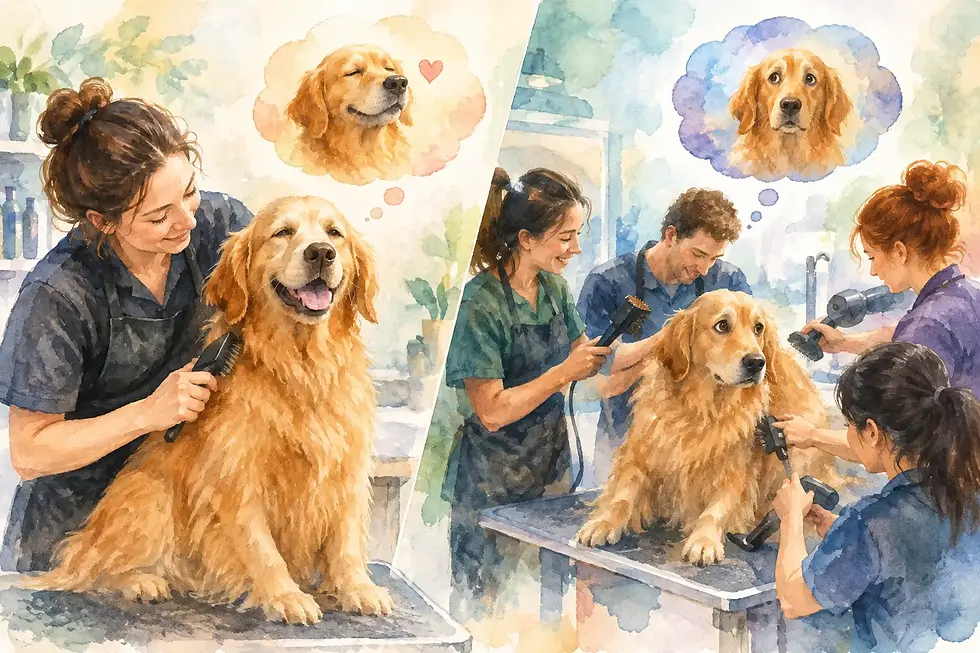
Routine grooming is a practical way to manage normal coat odor. A quality bath, complete drying, deshedding, brush-out, nail care, and sanitary-area maintenance can remove the dirt, loose hair, and moisture that make a dog smell less fresh. For busy North Georgia families, mobile grooming also means that care can happen without a car ride, crowded lobby, or long day away from home.
But grooming is not a substitute for veterinary care. Call your veterinarian if odor is sudden, severe, or paired with itching, redness, swelling, hair loss, discharge, pain, head shaking, scooting, changes in appetite, or behavior changes. A groomer can often notice concerns worth mentioning, but diagnosis and treatment belong with your vet.
A fresh-smelling dog is usually the result of consistent, gentle care rather than heavy fragrance. Keep your dog clean and dry, pay attention to changes in their normal scent, and treat a stubborn odor as useful information from a family member who cannot tell you exactly what hurts.
Comments