Mobile Grooming for Reactive Dogs Example
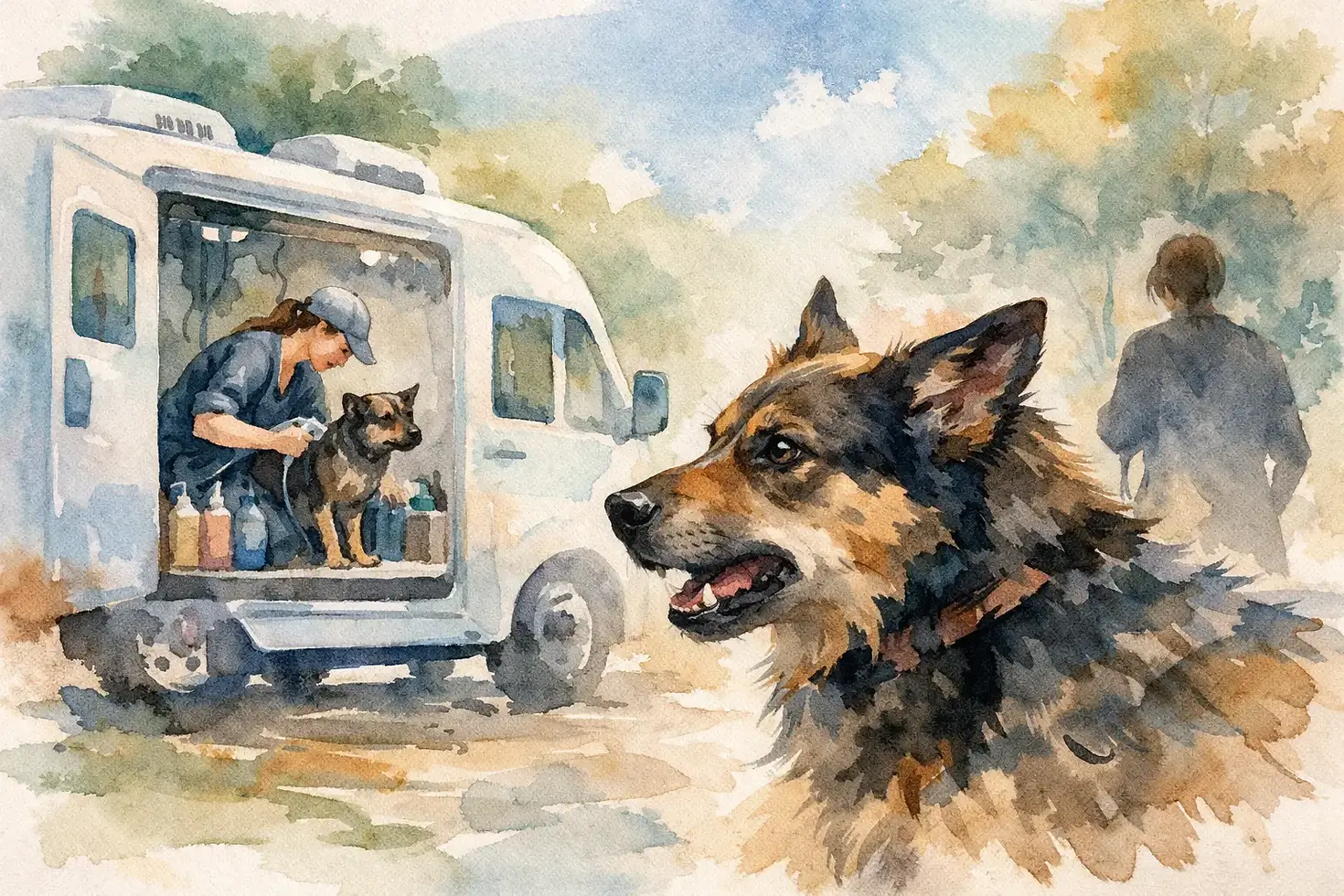
A mobile grooming for reactive dogs example often begins before a brush ever touches the coat. Picture a dog who barks, trembles, or lunges when a car ride ends at a busy grooming salon. Instead of being led through a lobby full of unfamiliar dogs, smells, dryers, and activity, that dog meets one groomer at the doorstep and receives focused care in a quiet, fully equipped mobile grooming space.
For many North Georgia families, that difference is more than convenient. It can be the difference between a grooming day that leaves everyone overwhelmed and one that feels manageable, respectful, and calm.
What reactivity can look like at grooming time
Reactive does not mean a dog is bad, aggressive, or incapable of being groomed. It simply means the dog has a bigger response to a trigger than the situation calls for. That trigger may be another dog, a stranger reaching toward their face, the sound of a dryer, being restrained, or the uncertainty of a new environment.
Some dogs react by barking, pacing, whining, pulling away, or refusing to enter a salon. Others freeze, shake, hide, snap when frightened, or become difficult to handle once they are past their comfort limit. A dog may be perfectly sweet at home and still struggle in a crowded grooming setting.
The goal is not to force a dog to “get over it” in a single appointment. The goal is to make grooming safer and less stressful while building familiarity over time.
A mobile grooming example for a reactive dog
Meet Scout, a fictional but very familiar example: a 55-pound mixed-breed dog who loves his family, enjoys neighborhood walks, and becomes highly vocal around other dogs. Scout also dislikes car rides. By the time he arrives at a traditional salon, he is already panting and pulling at the leash. A noisy waiting area pushes him further over threshold, and handling his feet becomes a struggle.
Scout’s owner schedules a mobile appointment instead. Before the visit, the groomer asks useful questions: What does Scout react to? Has he ever bitten or snapped? Does he have sensitive areas, skin concerns, or medical needs? What handling is easiest at home? Clear answers help the groomer prepare without assumptions.
On appointment day, Scout does not need to ride in the car or wait near unfamiliar dogs. He is brought directly from his home to a clean, sanitized grooming unit for a one-on-one session. There are no cages, no rotating line of dogs, and no crowded salon lobby outside the door.
The groomer gives Scout a little time to look around and settle. His owner keeps the handoff calm and matter-of-fact rather than stretching out the goodbye. The groomer uses gentle, steady handling and watches Scout’s body language from the first moments: tight posture, lip licking, turning away, raised hackles, a hard stare, or sudden stillness can all signal discomfort.
Scout gets a warm bath, coat drying at a pace he can tolerate, a careful brush-out, and a tidy trim. If nail trimming causes his stress to rise too high, the groomer may shorten the session, work on only a few nails, or recommend building that service up gradually. The best outcome is not always checking every box in one visit. It is protecting Scout’s trust while keeping his coat, skin, and hygiene needs on track.
At the next appointment, Scout recognizes the process. The space smells familiar. The groomer is familiar. There is less novelty and fewer triggers. With consistency, many dogs become noticeably more comfortable with grooming routines, even if they never become fans of every step.
Why one-on-one mobile care can help
A mobile service cannot erase every fear. Dogs with serious handling sensitivity, pain, or a bite history may need a more customized plan, veterinary support, or a groomer whose safety protocols fit their needs. But removing predictable stressors can make a real difference.
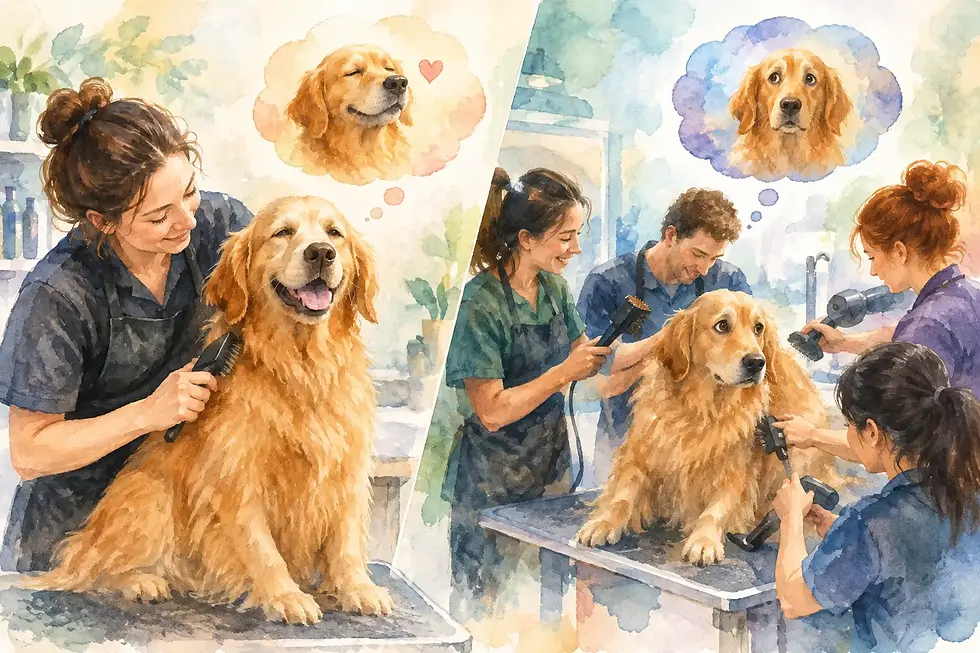
The biggest benefit is controlled exposure. In a traditional salon, a reactive dog may hear other dogs bark, smell many animals, see constant movement, and wait while their stress builds. A private mobile setting reduces those variables. The groomer can focus on one dog rather than moving between several pets.
Skipping the car ride matters, too. Many dogs begin worrying the moment a leash comes out because they associate it with an uncomfortable trip. Doorstep grooming removes that first hurdle. For busy families, it also removes loading up the car, arranging pickup times, and hoping a stressed dog settles in an unfamiliar place.
Cage-free care is another meaningful part of the experience. A dog is not left waiting in a kennel before or after the groom. Instead, their appointment is designed around direct, individualized attention. That is especially helpful for dogs that become distressed by confinement or close proximity to other pets.
What owners can do before the appointment
Your dog does not need to be perfectly relaxed to benefit from mobile grooming. Honest communication and simple preparation go a long way.
Share your dog’s behavior history early. Let the groomer know about growling, snapping, bite incidents, body sensitivity, medical conditions, joint pain, seizures, skin issues, or past grooming experiences that went poorly. This is not something to hide out of embarrassment. It helps protect your dog and the groomer and allows for a more realistic plan.
Keep the day calm. Avoid a busy dog park visit, a long car ride, or household chaos right before the appointment if those things tend to raise your dog’s energy. Give your dog a normal potty break, use a secure collar or harness, and have current vaccination information available if requested.
It also helps to practice gentle handling between appointments. Briefly touch a paw, lift an ear, brush for a few strokes, or reward your dog for standing on a non-slip surface. Stop before your dog becomes upset. These tiny, positive moments can make professional grooming feel less foreign over time.
When a shorter groom is the right call
Owners sometimes worry that an incomplete groom means the appointment was unsuccessful. For a reactive dog, a shorter visit can be a thoughtful and responsible choice.
Pushing through escalating fear can increase the risk of injury and make the next appointment harder. A skilled groomer may prioritize the services that matter most that day, such as a sanitary trim, face cleanup, coat maintenance, or removing uncomfortable tangles. Cosmetic finishing can wait if the dog needs a break.
This is particularly true when matting is involved. Mats can pull painfully on the skin and need timely attention, but the process may be uncomfortable for a sensitive dog. In some cases, a practical shorter trim is kinder than trying to preserve a longer style. Your groomer can explain the trade-off and help you choose the safest option for your pet.
Building a better routine over time
The most successful plan for a reactive dog is usually consistent, not perfect. Regular appointments prevent coats from becoming tangled, reduce the amount of brushing and drying needed, and make each session more familiar. A dog who visits only when their coat is severely matted or nails are painfully long may associate grooming with discomfort from the start.
Ask for a schedule that matches your dog’s coat and tolerance. A curly or high-maintenance coat may need more frequent care than a short, low-shed coat. Some dogs do best with full grooming appointments, while others benefit from alternating a full groom with a luxury bath or a smaller maintenance visit.
At The Wag Works, the focus is on premium care that respects the dog in front of us. Every pet deserves clean equipment, thoughtful handling, and an experience shaped around comfort and safety, never breed stereotypes or rushed assumptions.
A reactive dog may never wag at the sight of a nail trimmer, and that is okay. With patient one-on-one care, clear communication, and a setting that removes unnecessary stress, grooming can become a more predictable part of life - one calmer appointment at a time.

Comments